
Introduction
Have you ever seen a multi-million dollar infrastructure project grind to a halt? I have. It wasn't a technical failure or a funding shortfall that caused the delay. It was a small, overlooked group of local fishermen whose access to a traditional fishing ground was inadvertently blocked by the new water treatment plant's outflow pipe. The project team had consulted with government agencies, investors, and major contractors, but they never thought to walk the riverbank and talk to the people who used it every day. That mistake cost them six months and a significant amount of goodwill.
This is a story that plays out all too often. As an asset management professional, you will live and breathe the lifecycle of physical assets—from conception to decommissioning. But the most critical, and often most challenging, part of that lifecycle isn't the concrete, the steel, or the software. It's the people.
This guide is about mastering the fundamental skill of stakeholder identification. It’s not a box-ticking exercise. It's a strategic process of discovery that, when done right, protects your project from risk, builds crucial support, and ultimately ensures the asset delivers its intended value to the organization and the community it serves. We'll move beyond the obvious players and give you a framework for mapping the entire human ecosystem surrounding your asset.
Why Getting This Right Matters
Before we dive into the 'who', let's anchor ourselves in the 'why'. Failing to identify and engage a key stakeholder can lead to a cascade of negative outcomes: * Project Delays and Cost Overruns: As in the story of the fishermen, opposition from an overlooked group can trigger protests, legal challenges, and political interventions that stop work for months or even years. * Reputational Damage: Public opposition, especially when it's amplified by media, can tarnish the reputation of your organization, making it harder to get future projects approved. * Failure to Deliver Value: An asset designed without input from its end-users or operators may be difficult to maintain, inefficient to operate, or simply not meet the real-world need it was intended to address.
Conversely, a thorough stakeholder identification process builds a foundation for success. It allows you to anticipate challenges, align interests, and turn potential opponents into partners.
The Two Worlds of Stakeholders: Internal and External
The first step in mapping your stakeholder landscape is to draw a line between those inside your organization and those outside of it. While the line can sometimes blur, this initial separation helps organize your thinking and your engagement strategies.
Inside the Organization: Your Internal Stakeholders
These are the individuals and groups within your own company or agency who have a vested interest in the project. They are your colleagues, your bosses, and the teams who will ultimately operate, maintain, or be financially accountable for the asset. Never assume they are automatically on board; their priorities can and will differ.
Internal Stakeholders
Key internal groups include:
- Executive Leadership (C-Suite): Their primary interest is strategic alignment. Does this asset contribute to the organization's overall goals? How does it impact the bottom line, market position, or public mandate?
- Finance and Procurement: This department is focused on the financial viability of the project. They will scrutinize the budget, the return on investment (ROI), and the total cost of ownership over the asset's life.
- Operations and Maintenance (O&M) Teams: These are the people who will live with the asset long after the construction crews have gone home. Their concerns are practical: Is it designed for easy maintenance? Are spare parts readily available? Is the technology reliable? Engaging them early is one of the smartest moves you can make.
- Legal and Compliance: This team is your shield against legal and regulatory risk. They will be focused on permits, contracts, liability, and ensuring the project adheres to all applicable laws.
- Project Management Office (PMO): They are the custodians of the project delivery process, concerned with timelines, milestones, and resource allocation.
Mentor's Tip: The O&M Walk-Through
Before finalizing any design, print out the schematics and walk through them with your lead maintenance technician. Ask them: 'If this breaks at 2 a.m., what's your biggest headache?' The insights you gain from that single conversation can save you millions in operational costs down the road.
Beyond the Fence Line: Your External Stakeholders
This is where the landscape gets truly complex. External Stakeholders are all the parties outside your organization with a stake in the outcome. Their interests are incredibly diverse, and identifying them requires you to think like a detective, an anthropologist, and a political strategist all at once.
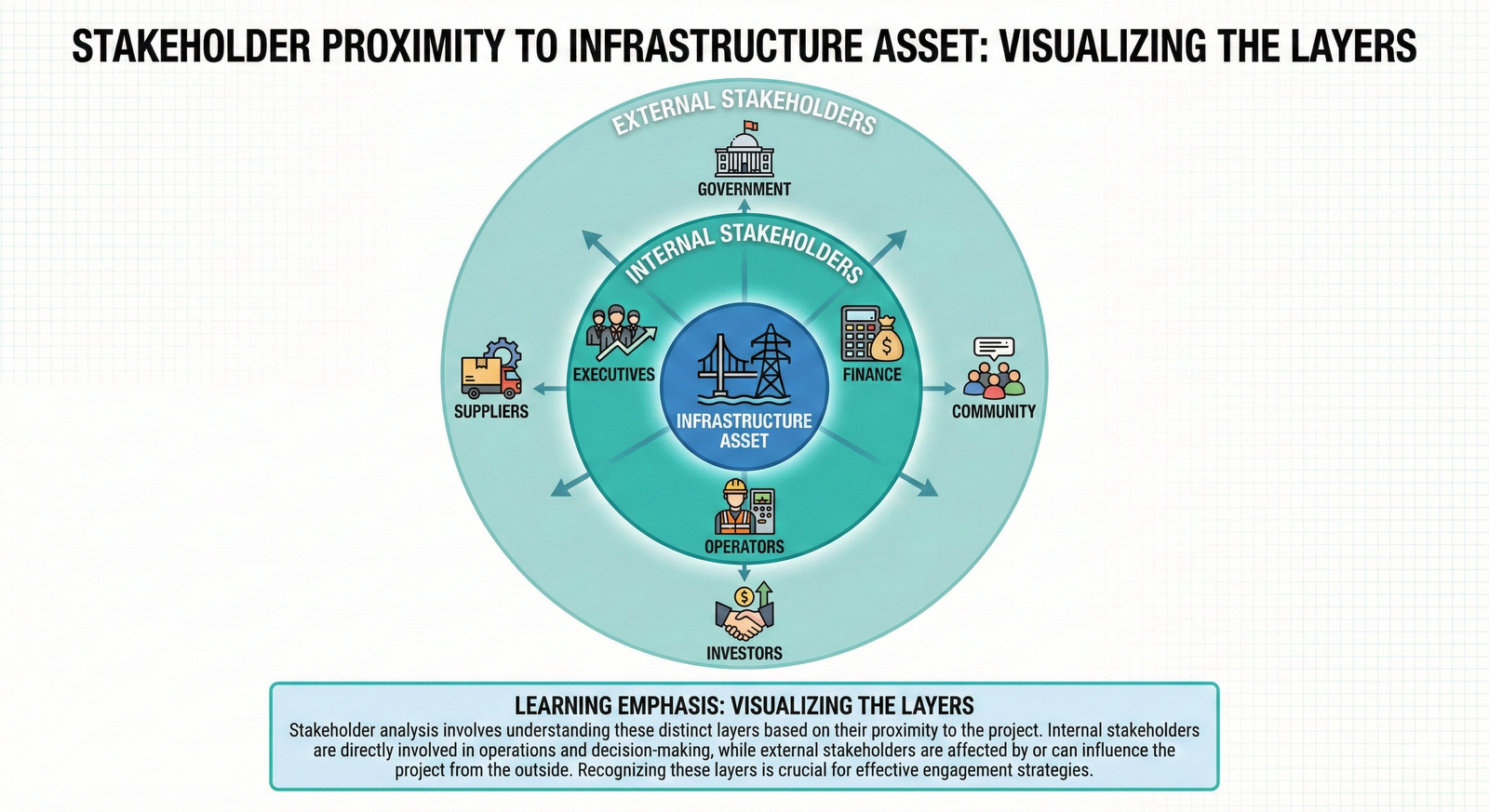
Let's break down the major categories.
The Rule-Setters: Regulatory Bodies
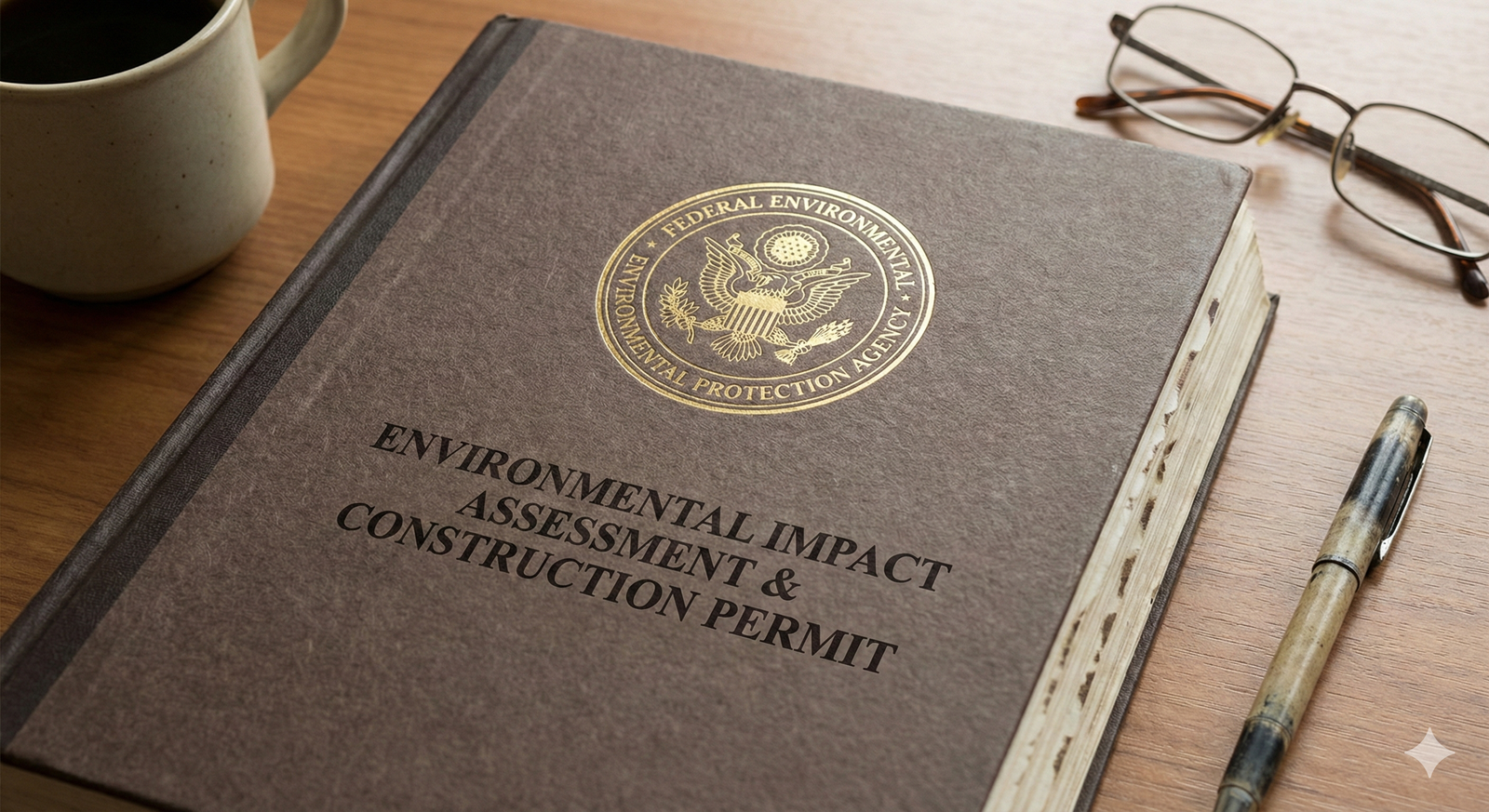
No significant infrastructure project happens in a vacuum. It is subject to a web of laws, codes, and standards enforced by various government and quasi-government agencies. These are not just stakeholders; they are gatekeepers who can grant or deny you the permission to proceed.
Regulatory Bodies
Examples include: * Environmental Agencies (e.g., EPA): Concerned with air and water quality, wildlife habitats, and waste disposal. * Transportation Departments: Focused on traffic flow, road access, and public transit integration. * Zoning and Planning Commissions: Ensure the project complies with local land use plans. * Historical Preservation Offices: Protect culturally or historically significant sites. * Utility Commissions: Regulate services and rates for power, water, and gas.
Their interest is not in your project's profitability but in its compliance with the public interest as defined by law. Your engagement with them is formal, technical, and evidence-based.
The Voice of the People: Community Groups
This is arguably the most dynamic and unpredictable category of stakeholders. Community Groups are driven by a direct and personal interest in how the project will affect their daily lives.
Their concerns often revolve around: * Quality of Life: Noise, dust, and traffic during construction. * Economic Impact: Will the project bring jobs or displace local businesses? Will it raise property values or lower them? * Environmental Justice: Is a particular neighborhood, often a low-income or minority community, bearing a disproportionate share of the negative impacts like pollution? * Access to Amenities: Will the project improve or restrict access to parks, waterfronts, or other public spaces?

Identifying these groups requires on-the-ground research. Attend local town hall meetings, read the local newspaper, and identify the unofficial community leaders. Their influence may not be formal, but their ability to mobilize public opinion is immense.
The Financial Engine: Investors
Whether the project is publicly or privately funded, the people providing the capital are crucial stakeholders. Their primary interest is financial, but the specifics can vary.
Investors
- For Public Projects: The ultimate investors are the taxpayers. Their interests are represented by elected officials who are concerned with responsible use of public funds and delivering visible benefits to their constituents.
- For Private Projects: Private Investors are focused on risk and return. They will want to see a clear business case, predictable revenue streams, and a competent management team. Increasingly, many large institutional investors also have Environmental, Social, and Governance (ESG) mandates, meaning they will scrutinize your project's community and environmental impact as part of their investment decision.
The Rise of ESG
Environmental, Social, and Governance (ESG) criteria are no longer a niche concern. Major investment funds now use ESG performance as a critical indicator of long-term risk management. A project with poor community relations or a negative environmental footprint is seen as a riskier, less attractive investment, regardless of its projected financial returns.
The Delivery Chain: Supply Chain Partners
A modern infrastructure project is not built by a single company. It is assembled through a complex network of suppliers, contractors, and consultants. These partners are stakeholders in your project's success.
Supply Chain Partners
Their primary interest is contractual and financial—getting paid on time for doing good work. However, their role is more profound. A major contractor can offer invaluable constructability advice that saves time and money. A key technology supplier can provide insights into future upgrade paths for the asset. Treating them as transactional vendors instead of partners is a missed opportunity. Their stability, capacity, and quality are all direct inputs into your project's risk profile.
📊 View Diagram: Simplified Supply Chain for a Wind Turbine Project
From Identification to Analysis
Simply listing stakeholders is not enough. The next step, which we will explore in later topics, is analysis. This involves mapping each identified stakeholder on a matrix based on their level of interest in the project and their level of influence or power over it. This analysis helps you prioritize your engagement efforts, focusing your limited time and resources on the relationships that matter most. For now, focus on casting the widest possible net. It is far better to identify a group and later classify them as low-interest than to be blindsided by a group you never knew existed.
Closing
We began with a story about fishermen and a water treatment plant—a simple example of a complex problem. The core lesson is that an asset is more than its physical components; it's a node in a complex human network. Your job as an asset manager is to see that network in its entirety.
By systematically working through the categories of internal and external stakeholders, from the C-suite in your own building to the community groups on the other side of town, you move from a reactive to a proactive stance. You are no longer just managing concrete and steel; you are managing relationships, expectations, and risks. This comprehensive approach to identifying the interests and concerns of every group, no matter how small they may seem, is what transforms a well-designed project on paper into a successful, valued asset in the real world.
Learning Outcomes
In this reading, you have developed the foundational skills for stakeholder management. You can now: * Identify a wide range of stakeholders for a given infrastructure asset, moving beyond the obvious to map a comprehensive landscape of interested parties. * Differentiate between internal and external stakeholder groups and list key examples within each category. * Explain the potential interests and concerns of diverse groups, including Regulatory Bodies, Community Groups, Investors, and Supply Chain Partners, recognizing that each has a unique perspective on the project's success.
Assess Yourself
❓ Knowledge Check
Test your understanding of the key concepts from this section.
Next Steps
You have successfully completed this guide to stakeholder identification. This is a critical first step in managing the complex human element of any asset management endeavor. Please navigate back to the course page to continue with your next activity.
