
The Skill
Stakeholder identification and analysis is the process of identifying all individuals, groups, or organizations that could be impacted by, or have an influence on, a particular asset or project. Once identified, you analyze their interests, expectations, and potential influence.
In Physical and Infrastructure Asset Management (PIAM), this means looking beyond the asset itself to understand the complex web of human interests surrounding it. For a public utility, stakeholders could range from regulatory agencies and government bodies to local community groups and the daily users of the service. A systematic approach to analysis is the foundation for creating an effective stakeholder engagement plan.
Why Is This Skill Important?
In asset management, projects do not exist in a vacuum. A bridge replacement, a new water treatment plant, or a power grid upgrade will always affect people. Failing to identify and engage with the right stakeholders at the right time can lead to significant project delays, budget overruns, public opposition, and reputational damage.
Mastering this skill allows you to be proactive. By understanding who your stakeholders are and what they care about, you can anticipate risks, manage expectations, build consensus, and ensure your project aligns with broader community and organizational goals. It transforms stakeholder management from a reactive damage-control exercise into a strategic tool for value creation and project success.
Your Task
You are an Asset Manager for the City of Northwood. The city is in the early planning stages for a major refurbishment of the 80-year-old 'Centennial Bridge,' a key transportation link. Your task is to conduct a preliminary stakeholder identification and analysis for this project to inform the initial project charter and engagement plan.
Your Steps to Completion
- Review the provided project brief for the Centennial Bridge refurbishment.
- Brainstorm a comprehensive list of potential stakeholders.
- Analyze and categorize each stakeholder using the Power/Interest Grid.
- Document your findings in a clear and organized Stakeholder Register.
Resources and Data
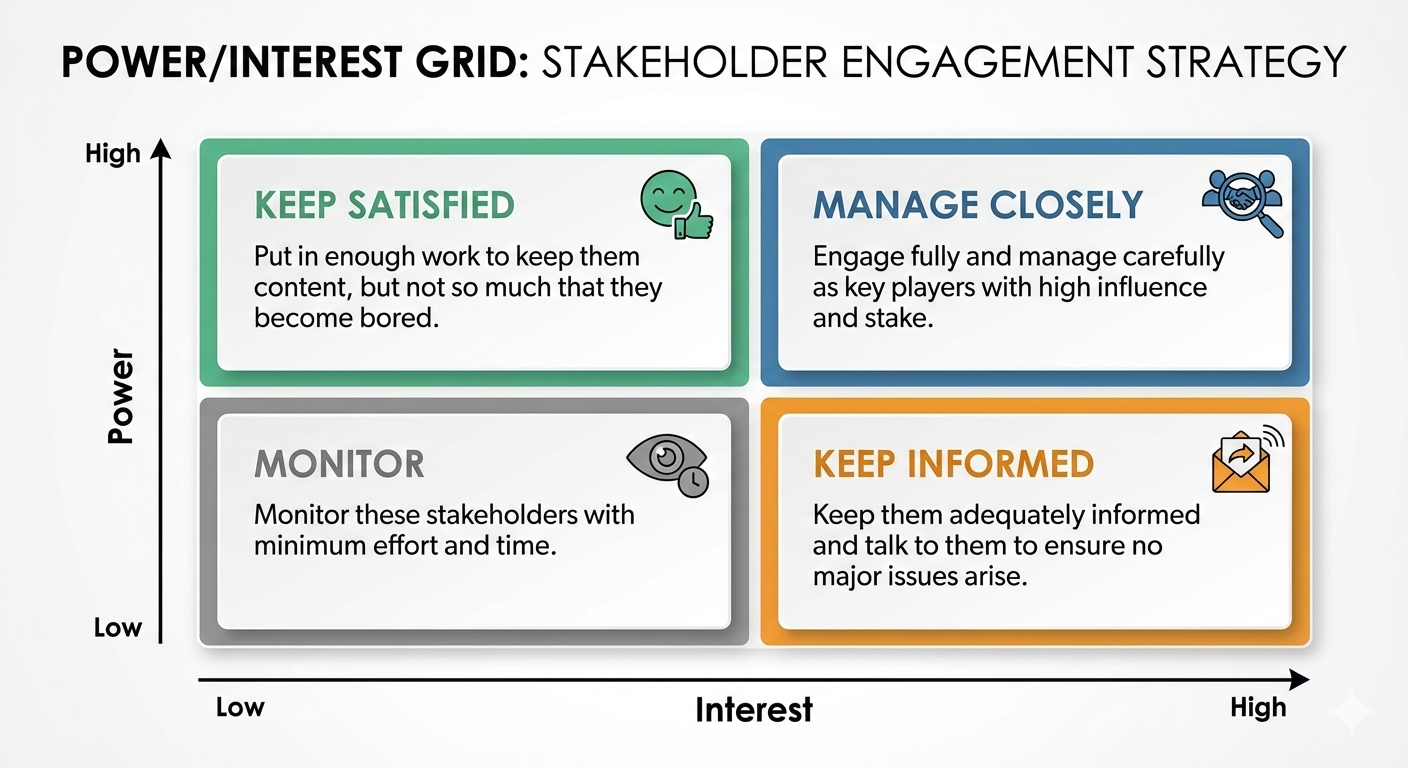
To complete this task, use the official project brief and the conceptual model for stakeholder analysis provided below. These resources contain the essential information you need to identify and assess the project's stakeholders.
Key Document: Project Brief: Centennial Bridge Refurbishment
Detailed Steps
Follow this procedure to build your stakeholder analysis from the ground up.
Step 1: Understand the Project Context
Begin by carefully reading the Project Brief: Centennial Bridge Refurbishment. Absorb all the details. Pay special attention to the scope of work, the location, the historical designation, and the potential disruptions mentioned (traffic, business access). This document is your primary source for clues about who will be affected or have a say in the project.
Step 2: Brainstorm Potential Stakeholders
Based on the project brief, create a list of every individual, group, or entity that might have a stake in the project's outcome. Think broadly and don't filter your ideas at this stage.
Thinking in Categories
To ensure a comprehensive list, consider these common stakeholder categories in public infrastructure projects:
- Internal: Departments within your own organization (e.g., Finance, Public Works).
- External: Groups outside your organization (e.g., residents, businesses, regulatory bodies).
- Connecting: Entities that bridge the internal and external, like contractors and suppliers.
Step 3: Analyze and Classify Each Stakeholder
Now, take your list of stakeholders and analyze each one using the Power/Interest Grid model. For each stakeholder, ask two key questions: 1. Power: How much influence do they have to help or hinder the project? (e.g., regulatory authority, funding control, public opinion). 2. Interest: How much will they be affected by the project's activities and outcomes? (e.g., daily disruption, financial impact, safety concerns).
Stakeholder Power
Stakeholder Interest
Assign a "Low" or "High" rating for both Power and Interest to each stakeholder. This will determine their position on the Power/Interest Grid and guide your engagement strategy.
Step 4: Create a Stakeholder Register
The final step is to organize your analysis into a stakeholder register. This is a standard professional document that provides a clear, at-a-glance summary of your findings. Use a simple table format to capture the key information for each stakeholder.
Stakeholder Register Template
| Stakeholder | Category (Internal/External) | Interest (Low/High) | Power (Low/High) | Engagement Strategy |
|---|---|---|---|---|
| Example: City Finance Dept. | Internal | High | High | Manage Closely |
An Expert Response
Note on This Example
This is a sample expert response based on the provided scenario. Your own analysis might identify different stakeholders or classify them differently, and that is perfectly acceptable. The most important part of this skill is having a clear rationale for your decisions.
An expert analysis begins with a systematic breakdown of the project brief, identifying stakeholders implied by the scope, budget, location, and potential impacts. The analysis is then organized into a formal register.
Expert Stakeholder Register: Centennial Bridge Refurbishment
| Stakeholder | Category | Interest (Low/High) | Power (Low/High) | Engagement Strategy |
|---|---|---|---|---|
| City Council | Internal | High | High | Manage Closely |
| Public Works Dept. | Internal | High | High | Manage Closely |
| State Dept. of Transportation | External | Low | High | Keep Satisfied |
| Federal Grants Agency | External | Low | High | Keep Satisfied |
| Downtown Business Association | External | High | High | Manage Closely |
| Northwood Residents (adjacent) | External | High | High | Manage Closely |
| Daily Bridge Commuters | External | High | Low | Keep Informed |
| City Historical Society | External | High | Low | Keep Informed |
| Emergency Services (Fire, Police) | Internal | High | Low | Keep Informed |
| Lead Engineering Contractor | Connecting | High | High | Manage Closely |
| General Public | External | Low | Low | Monitor |
Assess Yourself
How Did You Do?
Use the following criteria to evaluate your own stakeholder analysis against the expert example. This is for your own reflection and to help you refine your professional judgment.
- Comprehensiveness of Identification: Did you identify a wide range of relevant stakeholders, including internal, external, and connecting parties?
- Accuracy of Analysis: Is your assessment of each stakeholder's power and interest logical and clearly justified by the project brief?
- Strategic Prioritization: Did you correctly place stakeholders into the appropriate quadrant of the Power/Interest Grid (Manage Closely, Keep Satisfied, etc.)?
- Rationale for Engagement: Does your chosen engagement strategy logically follow from your analysis of power and interest?
- Clarity and Organization: Is your final stakeholder register clear, well-organized, and easy for another professional to understand and use?
Learning Progress
In this activity, you have practiced the essential skill of performing stakeholder identification and analysis for a physical asset management project. You applied a systematic process to identify key players, analyze their influence and interest, and document your findings in a professional stakeholder register.
Next Steps
You have successfully completed this skill-building exercise. This ability to analyze stakeholders is a critical competency for any asset management professional. Please navigate back to the main course page to continue your learning.