
Introduction
As an asset manager, you are intimately familiar with the physical world of your assets—the hum of the machinery, the condition of the infrastructure, the schedule for the next maintenance cycle. But to truly excel and drive strategic value for your organization, you must also speak a second language: the language of finance.
Decisions about multi-million dollar assets are not made in a vacuum. They are made in boardrooms where the discussion revolves around budgets, returns, and risk. This is where your ability to translate the physical condition of an asset into a compelling financial story becomes your most powerful tool. Understanding and using financial ratios allows you to move from being a custodian of assets to a strategic partner who can justify investments, demonstrate value, and secure the resources needed to ensure long-term reliability and performance.
Thinking Like a Chief Financial Officer
Your role is to manage the lifecycle of physical assets, but the ultimate goal of any organization is financial sustainability. Whether you work for a public utility, a transportation authority, or a private manufacturing firm, the assets under your care must contribute to the organization's financial health. This means every decision—to repair, replace, or run to failure—has a financial consequence.
To make the best decisions, you need to see the bigger picture. How does a major capital investment affect the organization's ability to pay its short-term bills? Is a particular asset generating enough value to justify its ongoing maintenance costs? How does our portfolio of assets look to investors or creditors? Answering these questions requires you to step outside the purely technical domain and into the world of financial analysis.
The Language of Finance: Ratios
The primary tool for this analysis is the Financial Ratios. Think of ratios as a diagnostic tool, much like the vibration analysis you might run on a motor. A single number from a vibration test doesn't tell you everything, but it points you to areas that need a closer look. Similarly, a financial ratio provides a quick, standardized snapshot of financial health, helping you identify strengths, weaknesses, and trends.
The Foundation: What Is It Worth?
Before you can measure the performance of an asset, you must first agree on its value. This is the concept of Asset Valuation. It seems simple, but the "value" of a 20-year-old water pump can be defined in several ways, and the method you choose can significantly change the outcome of your financial analysis.
Common Valuation Methods
- Book Value: The asset's original cost minus accumulated depreciation. This is an accounting figure and may not reflect true value.
- Market Value: The price the asset could be sold for on the open market. This can be difficult to determine for unique infrastructure assets.
- Replacement Value: The cost to replace the asset with a new, modern equivalent. This is often the most relevant value for asset management planning.
When building a business case, be clear about which valuation method you are using and why it's the most appropriate.
For infrastructure asset managers, replacement value is often the most practical metric. It directly informs long-term capital planning and helps in making a case for funding, as it reflects the real-world cost of maintaining a certain level of service.
Categories of Ratios: Your Diagnostic Toolkit
Financial ratios are typically grouped into categories, each providing a different lens through which to view the organization's health. We'll focus on three key categories that are most relevant to you.
1. Liquidity Ratios: Can We Pay Our Bills?
Liquidity Ratios measure the organization's ability to cover its short-term liabilities with its short-term assets. Why does this matter to you? Imagine a critical piece of equipment fails unexpectedly. The repair requires a significant, unbudgeted cash outlay. If the organization has poor liquidity, it may not have the cash on hand, forcing you to either delay the repair (risking further damage and service disruption) or finance it at a high cost.
A common liquidity measure is the Current Ratio. It's calculated as:
Current Ratio = Current Assets / Current Liabilities
- Current Assets are things the organization owns that can be converted to cash within a year (e.g., cash, accounts receivable).
- Current Liabilities are what the organization owes within a year (e.g., accounts payable, short-term loans).
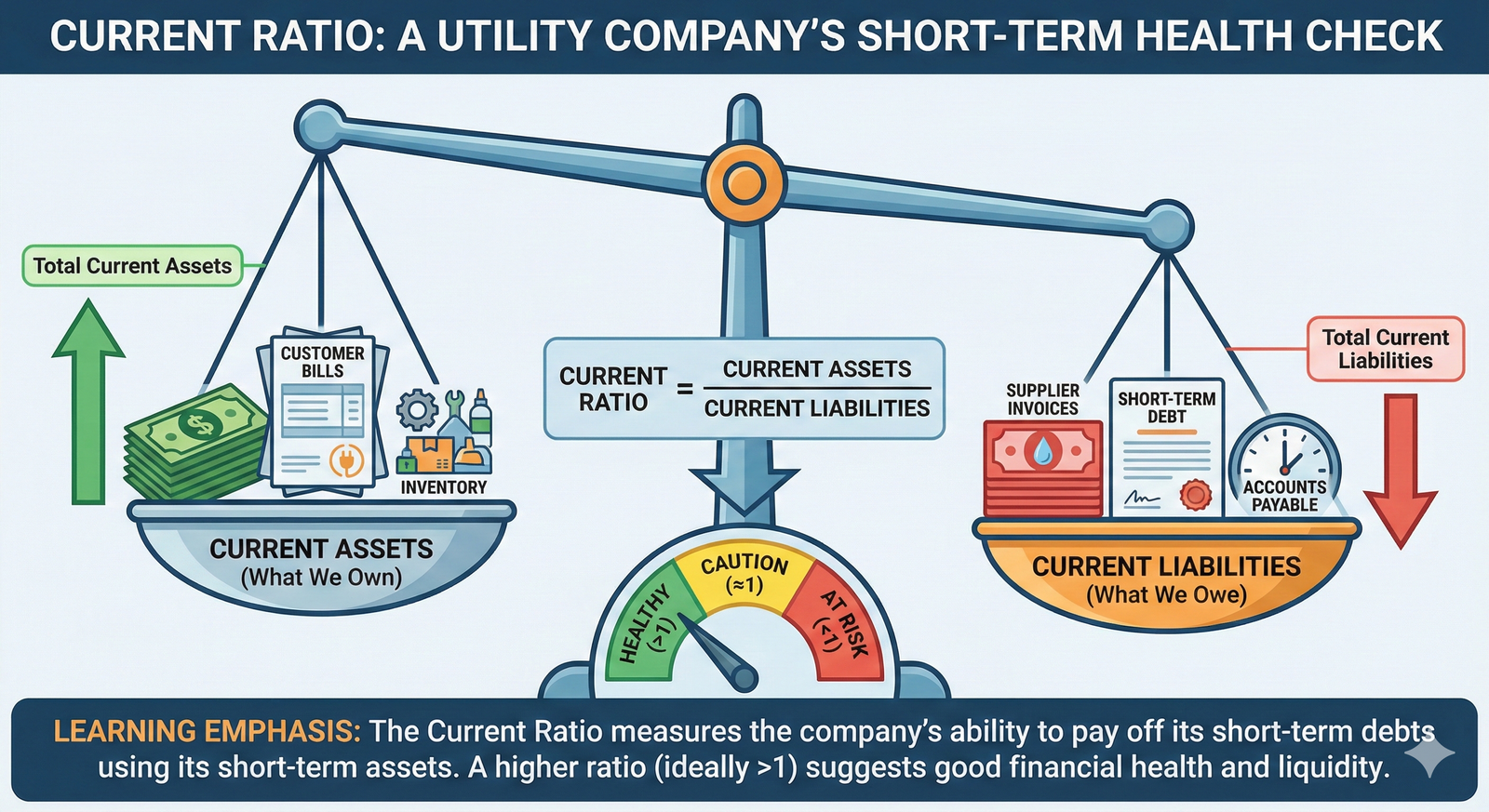
A ratio greater than 1 suggests the organization can cover its short-term debts. A ratio below 1 can be a red flag. As an asset manager, if you see your organization's liquidity trending downward, it's a signal to be more rigorous in your budgeting and to communicate the financial risks of deferring maintenance.
2. Profitability Ratios: Are Our Assets Working for Us?
While liquidity is about short-term survival, profitability is about long-term success. Profitability Ratios show how effectively the organization is using its assets to generate profit. For public sector entities, "profit" might be better framed as "value" or "surplus," but the principle is the same: are we getting enough bang for our buck?
The single most important profitability ratio for an asset manager is Return on Investment (ROI). While often applied to the whole company, you can—and should—apply it to individual assets or projects.
The basic formula is:
ROI = (Net Profit / Cost of Investment) x 100
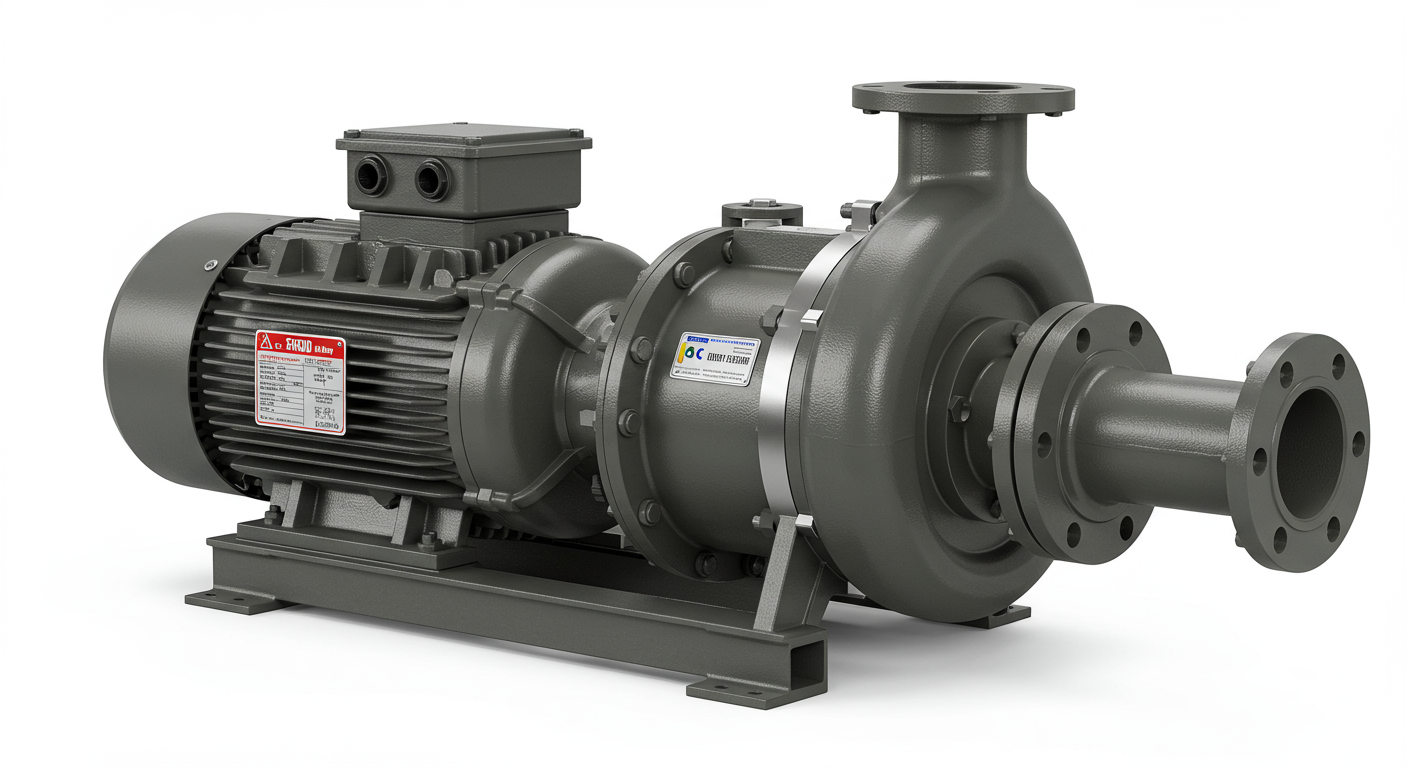
Let's make this practical. Suppose you are responsible for a fleet of pumps at a water distribution facility. You're considering replacing an older, less efficient pump with a new, high-efficiency model. How do you justify the capital expenditure? You build a case using ROI.
To calculate the ROI, you need to look beyond the initial purchase price. You need to consider the Total Cost of Ownership (TCO) and the total benefits.
Let's compare two options for a pump replacement project.
Table 1: 10-Year Financial Comparison of Pump Options
| Metric | Option A: Standard Pump | Option B: High-Efficiency Pump |
|---|---|---|
| Initial Purchase Cost | $35,000 | $55,000 |
| Total Maintenance Cost (10 yrs) | $10,000 | $12,000 |
| Total Energy Cost (10 yrs) | $150,000 | $80,000 |
| Total Cost of Investment (10 yrs) | $195,000 | $147,000 |
| Projected 10-Year Savings (vs. doing nothing) | $5,000 | $53,000 |
Using the data from the table above, you can calculate the ROI for the high-efficiency pump project. The "Net Profit" here is the total savings generated, and the "Cost of Investment" is the total cost. By presenting a clear, positive ROI, you are no longer just asking for a new pump; you are presenting a sound financial investment that will deliver tangible returns to the organization.
3. Debt Ratios: How Much Risk Are We Carrying?
Large infrastructure assets are often financed through debt. Debt Ratios (or leverage ratios) measure how much an organization relies on borrowing to fund its operations. A key example is the Debt-to-Asset Ratio:
Debt-to-Asset Ratio = Total Debt / Total Assets
This ratio shows what proportion of the organization's assets are financed through debt. A high ratio indicates higher financial risk. If you are proposing a major new project that requires significant borrowing, you need to understand how this will affect the organization's overall debt profile. Presenting your project proposal with an awareness of its impact on key debt ratios shows financial maturity and strategic thinking.
Putting It All Together: Making the Business Case
Let's return to the scenario of making a business case to replace a critical pipeline. How do you use these tools?
📊 View Diagram: Flowchart for a Financially-Driven Asset Business Case
- Start with Valuation: Determine the replacement value of the pipeline. This is your core investment figure.
- Calculate ROI: Your "return" isn't profit in the traditional sense. It's cost avoidance. Calculate the annual cost of emergency repairs, water loss from leaks, and potential fines for service disruption associated with the old pipe. This cost avoidance is the "return" on your investment in a new pipeline.
- Assess Broader Impact: How will the financing for this project affect the utility's Debt-to-Asset ratio? Does the utility have enough liquidity (checked via the Current Ratio) to manage the project's cash flow without jeopardizing other operational needs?
- Build the Narrative: Combine the physical risk (e.g., "This pipeline has a 50% probability of a major failure in the next 5 years") with the financial case (e.g., "Replacing it now represents an ROI of 15% over 10 years through avoided costs and will only marginally increase our debt ratio").
By using this approach, you transform the conversation. You are no longer just the person asking for money. You are a strategic manager presenting a data-backed investment opportunity that mitigates risk and ensures long-term financial health.
The Future is Real-Time
Historically, this type of financial analysis was done periodically, using data that might be weeks or months old. The exciting future of asset management lies in the integration of real-time operational data with financial models. With the rise of IoT sensors and predictive analytics, we can now monitor asset performance continuously.
Imagine a dashboard that doesn't just show a pump's vibration and temperature, but also its real-time ROI, factoring in energy consumption, output, and predicted maintenance needs. This allows for dynamic decision-making, where you can identify underperforming assets not just physically, but financially, and intervene before they become a major liability. This fusion of operational technology (OT) and financial technology (FinTech) is the next frontier for our profession.
Closing
We've covered a lot of ground, moving from the concrete world of physical assets to the abstract, but equally important, world of financial statements. The key takeaway is that financial ratios are not just for the accounting department. They are a critical part of your toolkit as a modern asset manager.
By understanding the principles of asset valuation, you can establish a firm foundation for any analysis. By interpreting key profitability ratios like Return on Investment (ROI), you can effectively demonstrate the value your assets are generating and make a compelling case for new investments. And by keeping an eye on the broader organizational health through liquidity and debt ratios, you ensure your asset management strategy is aligned with the company's overall financial strategy. Mastering this financial language will empower you to make smarter decisions, communicate more effectively with senior leadership, and ultimately, elevate the strategic importance of your role.
Learning Outcomes
In this reading, you have learned how to connect the physical management of assets with the financial health of an organization. You can now:
- Explain how different categories of financial ratios—specifically liquidity, profitability, and debt ratios—serve as diagnostic tools to assess an organization's overall financial stability and performance.
- Describe why asset valuation is a fundamental first step in any financial analysis, and recognize different methods for determining an asset's worth.
- Calculate and interpret a key performance metric, Return on Investment (ROI), to evaluate the financial efficiency of a specific asset or project and build a data-driven business case.
You have also been introduced to the core concepts and vocabulary essential for these skills, including Financial Ratios, Asset Valuation, Return on Investment (ROI), Liquidity Ratios, Profitability Ratios, and Debt Ratios.
Assess Yourself
Check your understanding of the key concepts from this reading with this short quiz.
❓ Knowledge Check
Test your understanding of the key concepts from this section.
Next Steps
Great work completing this reading. You've taken an important step in building the financial acumen that separates good asset managers from great ones.
Please navigate back to the course to continue your learning journey.
