Introduction
For decades, the core of physical asset management was a predictable, if challenging, discipline. We tracked the lifecycle of our assets—bridges, pipelines, power grids—and based our maintenance and replacement schedules on historical data and material science. The primary risks we managed were deterioration, mechanical failure, and budget constraints. That world, however, no longer exists.
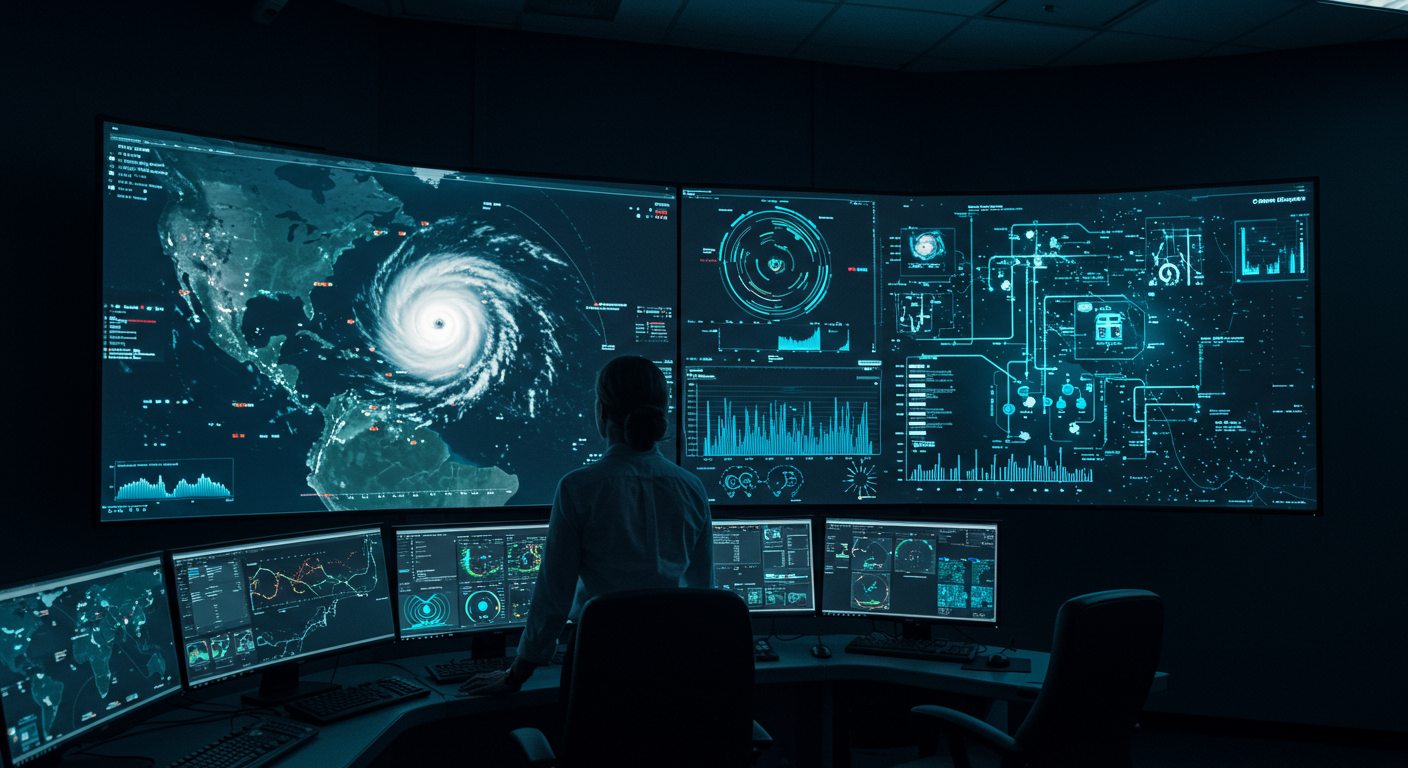
Today, as an asset manager, you are on the front lines of two global-scale challenges that are fundamentally reshaping our profession: climate change and cybersecurity. These are not future problems; they are active, present-day risks that can, and do, interact in dangerous ways. A heatwave can strain a power grid, making it more vulnerable to a cyber attack. A targeted hack on a water utility's control system during a flood can have catastrophic consequences. Your job is no longer just about managing physical decay; it's about building resilience against complex, interconnected, and often invisible threats. This article will equip you to start navigating this new, challenging landscape.
The New Risk Equation
The traditional risk formula, often expressed as Risk = Likelihood x Consequence, remains a useful starting point. What has changed are the variables. The "likelihood" of extreme weather events is no longer reliably predicted by historical data, and the "consequence" of a failure is magnified when physical and digital systems are intertwined. As a modern asset manager, your task is to re-evaluate this equation in the context of these new, dynamic forces.
Integrating Climate Change: From Abstract Projections to Actionable Plans
We can no longer plan for the climate of the past. Relying on 20th-century weather data to design 21st-century infrastructure is a recipe for failure. The key is to build for Climate Resilience, which requires a forward-looking approach to risk assessment.
So, how do you translate a global climate model's prediction of a 2°C temperature rise into a concrete decision about what type of asphalt to use on a new highway? The process involves several steps:
-
Sourcing Climate Projections: You need to move beyond historical weather records and access downscaled climate models. These models take global projections and apply them to your specific region, providing probabilistic data on future heatwaves, precipitation patterns, sea-level rise, and storm intensity.
-
Vulnerability Assessment: With this data, you can assess which of your assets are most vulnerable. A wastewater treatment plant on the coast is obviously vulnerable to sea-level rise and storm surge. But what about a railway line's susceptibility to track buckling during prolonged, extreme heatwaves—an event that may have been rare in the past but is projected to become common?
-
Integrating into Risk Models: This is where you update your risk matrix. The "likelihood" of a 1-in-100-year flood might now be a 1-in-20-year event in your asset's projected lifespan. This changes everything, from capital investment planning to emergency response protocols.
📊 View Diagram: Process for Integrating Climate Projections into Asset Risk Assessment
A Mentor's Advice: Think in Probabilities, Not Certainties
Climate models don't give you a single answer; they provide a range of possibilities. Don't ask, 'Will this flood happen?' Instead, ask, 'What is the increased probability of this flood happening, and what is the range of potential severity?' Your job is to plan for a future of increased uncertainty, building systems that are robust across a range of potential scenarios, not just optimized for one predicted outcome.
The Invisible Threat: Securing Our Cyber-Physical Systems
While you're planning for rising sea levels, another threat is quietly infiltrating our infrastructure. Our assets are no longer just steel and concrete; they are complex Cyber-Physical Systems. The operational technology (OT) that runs them, particularly SCADA (Supervisory Control and Data Acquisition) systems, was often designed decades ago with a focus on reliability and safety, not security. These systems were frequently "air-gapped," meaning they had no connection to the outside internet.
That is no longer the case. The drive for efficiency and remote monitoring has connected many of these legacy systems to corporate networks and the internet, often without adequate security measures. This creates a new and dangerous attack surface.
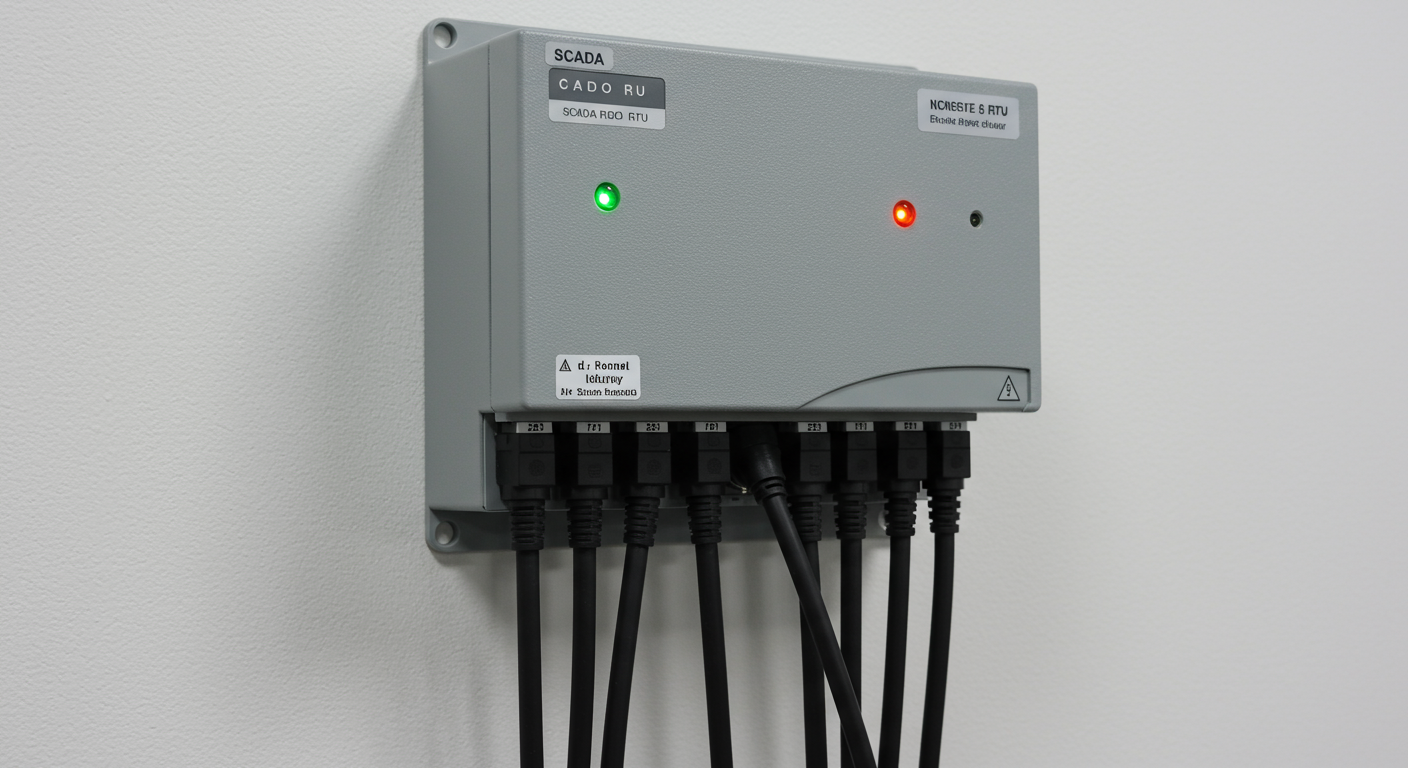
The risks here are profoundly different from traditional IT security. In an IT breach, the target is data—customer information, financial records. In an OT breach, the target is the physical world. An attacker isn't trying to steal your password; they're trying to open a floodgate, shut down a power substation, or change the chemical mixture at a water treatment plant. The consequences can be direct, physical, and potentially lethal.
The Convergence of Crises: Understanding Cascading Failures
The most sophisticated risk models treat climate and cyber threats as separate issues. The reality is that they are often deeply intertwined, capable of triggering Cascading Failures.
Consider this plausible scenario: 1. Climate Trigger: A prolonged, severe heatwave puts unprecedented strain on a city's power grid. 2. Physical Failure: An aging substation transformer overheats and fails, causing a localized blackout. 3. Cyber Vulnerability: The blackout disables the security systems and cooling fans at a nearby water utility's control center. The backup generator fails to kick in. 4. Cyber Attack: A malicious actor, who has been dormant in the network for months, detects the system's weakened state. They exploit the vulnerability to issue commands that shut down water pumps serving a critical area, including a hospital. 5. Cascading Consequence: The hospital is now without power and water during a heatwave, forcing it to evacuate patients and creating a major public health crisis.
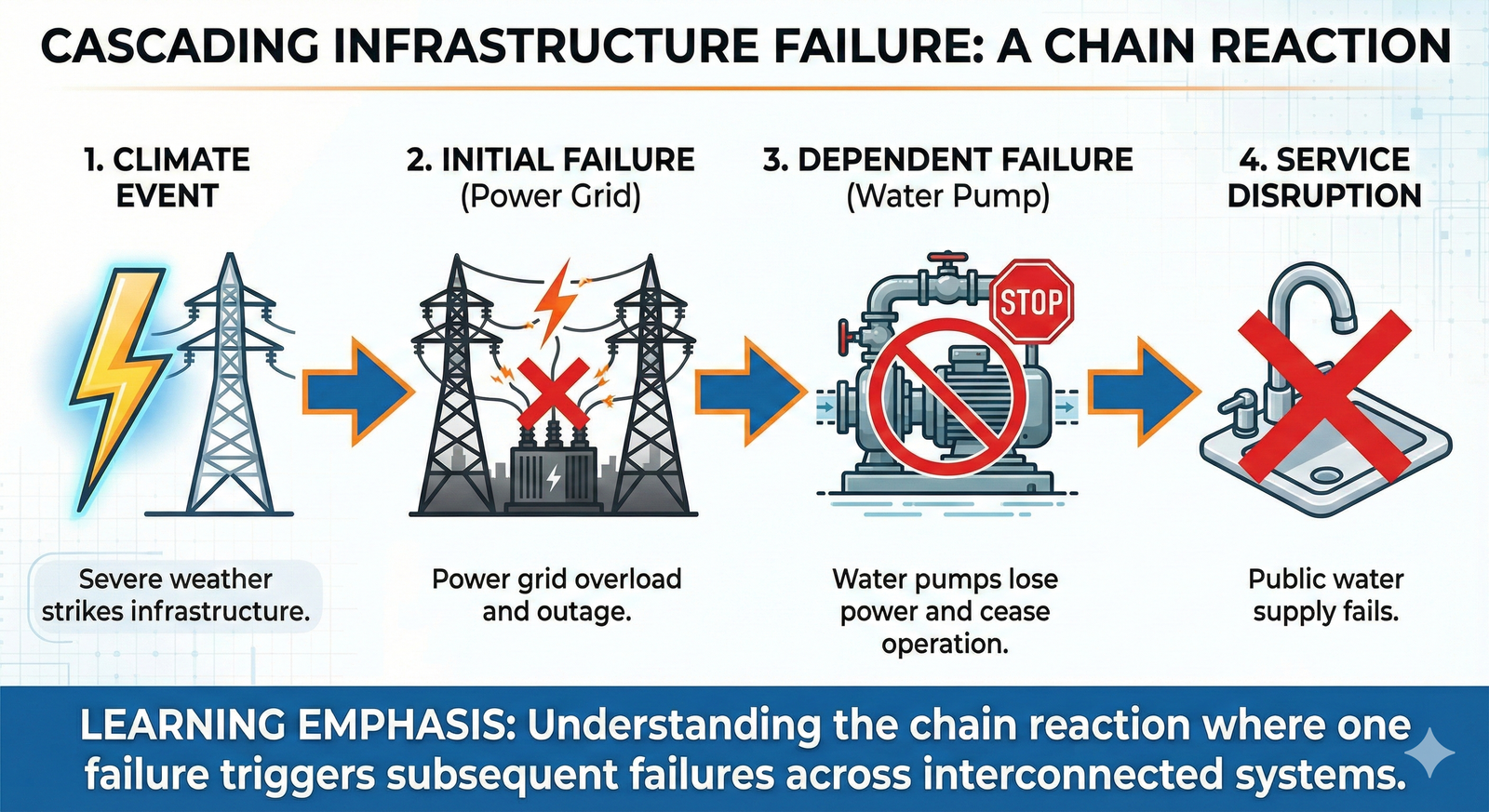
This is the new frontier of risk management. You must learn to think about how systems interact and fail together, not just how they fail in isolation.
The Future is Now: Advanced Modeling with Digital Twins
So how can we possibly model, let alone manage, such complex and interconnected risks? The answer lies in emerging technologies that allow us to simulate and predict asset performance in ways that were previously science fiction.
The most powerful of these is the Digital Twin. Imagine having a perfect virtual replica of your city's entire water distribution network. This twin isn't just a map; it's fed real-time data from thousands of sensors measuring flow rates, pressure, water quality, and pump status.
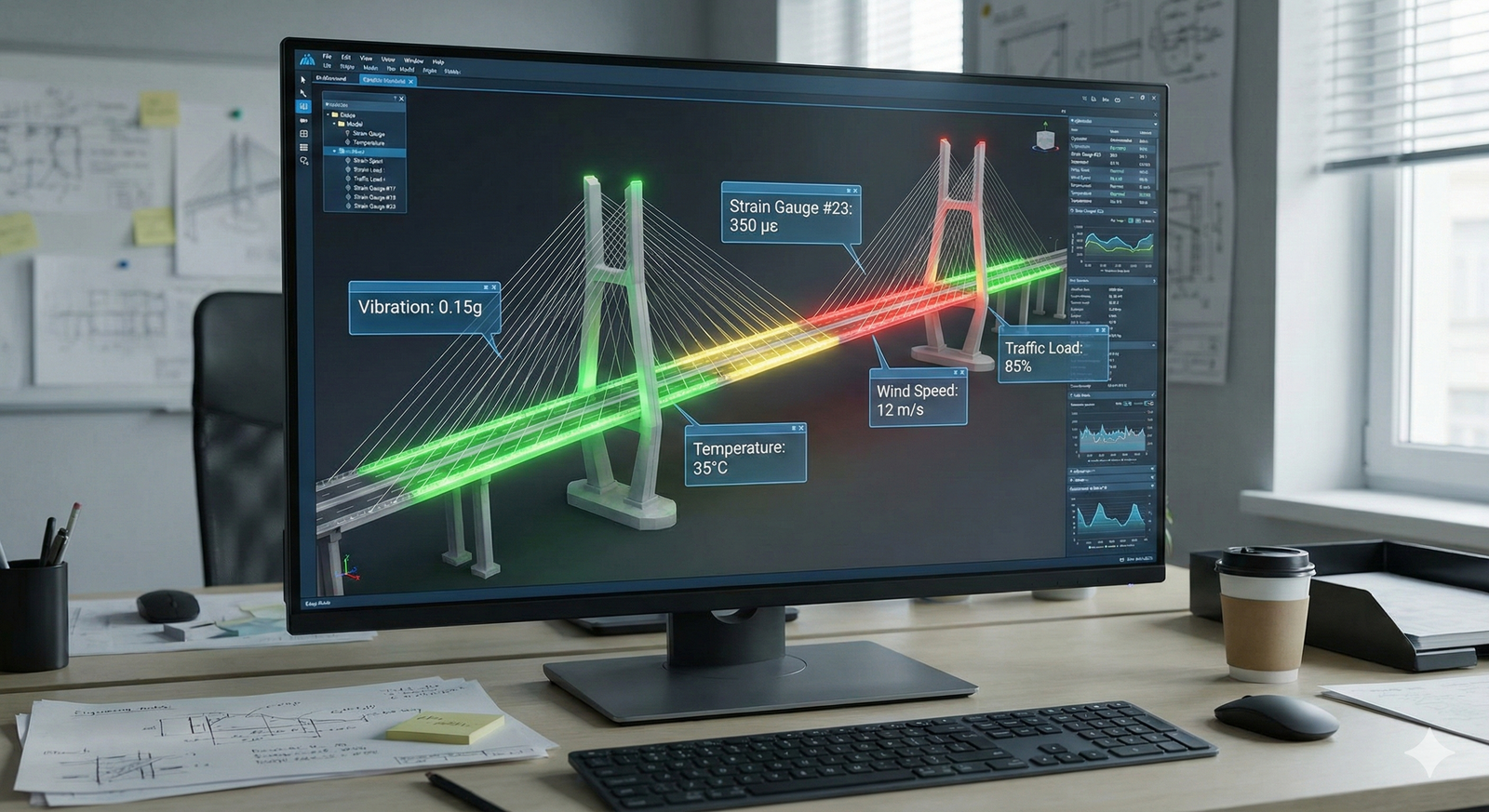
With this digital twin, you can: * Simulate Scenarios: What happens if we lose power to Pump Station 5 during a heatwave? The twin can simulate the cascading effects on pressure and supply throughout the network, identifying critical vulnerabilities before they happen in the real world. * Test Responses: You can test cyber-attack scenarios in the virtual world. What if an attacker closes a critical valve? The twin can model the physical consequences (like a water hammer effect that could burst a real pipe) without any real-world risk. * Enable Predictive Analytics: By feeding years of sensor data and maintenance records into machine learning algorithms, you can move beyond scheduled maintenance to true Predictive Analytics. The system can learn the unique signature of a pump motor just before it fails, allowing you to replace it with minimal disruption.
To give you a sense of the data involved, consider this simplified sample of sensor readings from a bridge.
Table 1: Hourly Sensor Readings for Bridge Section A4
| Timestamp | Temperature C | Wind Speed KPH | Strain Gauge 1 microstrain | Vibration Hz | Failure Imminent Flag |
|---|---|---|---|---|---|
| 2023-11-10T12:00:00Z | 14.5 | 15.2 | 185 | 0.78 | 0 |
| 2023-11-10T15:00:00Z | 16.1 | 25.8 | 240 | 1.15 | 0 |
| 2023-11-10T18:00:00Z | 13.9 | 35.1 | 310 | 1.95 | 0 |
| 2023-11-10T21:00:00Z | 11.2 | 31.5 | 295 | 1.81 | 0 |
| 2023-11-11T00:00:00Z | 9.8 | 18.0 | 205 | 0.92 | 0 |
| 2023-11-11T03:00:00Z | 8.5 | 45.4 | 420 | 2.35 | 0 |
| 2023-11-11T06:00:00Z | 10.1 | 41.2 | 395 | 2.18 | 0 |
| 2023-11-11T09:00:00Z | 12.8 | 22.9 | 235 | 1.05 | 0 |
| 2023-11-11T12:00:00Z | 15.3 | 12.1 | 170 | 0.65 | 0 |
| 2023-11-11T15:00:00Z | 17.0 | 38.6 | 365 | 2.01 | 0 |
| 2023-11-12T08:30:00Z | 11.5 | 55.2 | 950 | 4.88 | 1 |
| 2023-11-12T09:00:00Z | 11.4 | 56.1 | 1125 | 5.75 | 1 |
| 2023-11-12T09:30:00Z | 11.4 | 54.8 | 1480 | 7.12 | 1 |
| 2023-11-12T10:00:00Z | 11.3 | 57.0 | 1790 | 8.95 | 1 |
| 2023-11-12T10:30:00Z | 11.2 | 58.3 | 2150 | 10.23 | 1 |
By analyzing thousands of rows like this, a predictive model can learn the subtle patterns that precede a failure, turning your maintenance team from reactive responders into proactive managers.
Closing
The role of the Physical and Infrastructure Asset Manager has undergone a fundamental transformation. We are no longer simply custodians of static, depreciating assets. We are the managers of complex, dynamic systems under pressure from the converging forces of climate change and cyber threats. Ignoring either of these is no longer an option.
Successfully navigating this new landscape requires you to expand your toolkit. You must learn to integrate forward-looking climate projections into your risk assessments and understand the unique vulnerabilities of the SCADA and ICS systems that control your physical assets. Most importantly, you must embrace new technologies like digital twins, not as a novelty, but as an essential tool for modeling, simulating, and managing the interconnected risks of the 21st century. The challenge is immense, but with the right mindset and tools, you can build the resilient infrastructure that our society depends on.
Learning Outcomes
In this reading, you have explored the new frontiers of risk in asset management. You are now better equipped to:
- Integrate Climate Projections: You can now identify the steps required to incorporate future climate data into infrastructure risk assessments, moving beyond purely historical analysis.
- Analyze Cyber-Physical Threats: You can describe the specific risks that cybersecurity threats pose to physical control systems like SCADA, distinguishing them from traditional IT security concerns.
- Evaluate Emerging Technologies: You can now evaluate how advanced tools like digital twins and predictive analytics can be used to model and manage complex, interconnected risks.
You have also been introduced to the core concepts that define this new landscape, including Climate Resilience, Cyber-Physical Systems, SCADA, Digital Twin, Predictive Analytics, and the dangerous potential of Cascading Failures.
Assess Yourself
Take a moment to check your understanding of the key concepts from this article.
❓ Knowledge Check
Test your understanding of the key concepts from this section.
Next Steps
You have successfully completed this reading on the new frontiers of infrastructure risk. This is a critical and evolving area of our profession. Please navigate back to the main course page to continue your learning journey.
