
The Skill
Failure Modes and Effects Analysis (FMEA) is a structured, proactive technique used to identify and evaluate potential failures in a system, product, or process. It involves systematically breaking down a complex system into its individual components and processes to pinpoint where failures could occur, what the consequences might be, and how severe they are.
The core of the FMEA process is to anticipate failures before they happen. By quantifying risk, you can prioritize which potential failures demand immediate attention, allowing you to allocate resources effectively to prevent them. This shifts asset management from a reactive "fix-it-when-it-breaks" model to a proactive strategy focused on reliability and safety.
Why Is This Skill Important?
In physical and infrastructure asset management, unexpected failures can lead to catastrophic consequences, including production downtime, safety incidents, environmental damage, and significant financial loss. Conducting an FMEA is a fundamental risk assessment skill that allows you to move beyond guesswork and make data-informed decisions.
Mastering this process enables you to justify maintenance budgets, improve the design of new systems, and create targeted maintenance plans that focus on the most critical failure points. It is a cornerstone of any robust reliability and asset integrity program, ensuring that your organization's physical assets perform their required function safely and effectively throughout their lifecycle.
Your Task
Your task is to conduct a basic Failure Modes and Effects Analysis (FMEA) for a centrifugal pump system used in a water treatment facility. You will use the provided system specifications and FMEA template to identify potential failure modes, analyze their effects, and calculate a Risk Priority Number (RPN) to quantify the risk associated with each failure.
Your goal is to complete the FMEA table by filling in your analysis for at least three potential failure modes. This will give you hands-on practice with the core methodology of this critical risk assessment technique.
Your FMEA Process
- Review the provided Centrifugal Pump System resources.
- Identify at least three potential failure modes for the system.
- For each failure mode, determine the potential effects and causes.
- Assign Severity (S), Occurrence (O), and Detection (D) ratings using the provided scales.
- Calculate the Risk Priority Number (RPN) for each failure mode.
- Propose a recommended action for the failure mode with the highest RPN.
Resources and Data
Use the following resources to complete your analysis. The specification sheet provides the technical context for the pump system, and the FMEA worksheet is the template for you to complete your analysis.
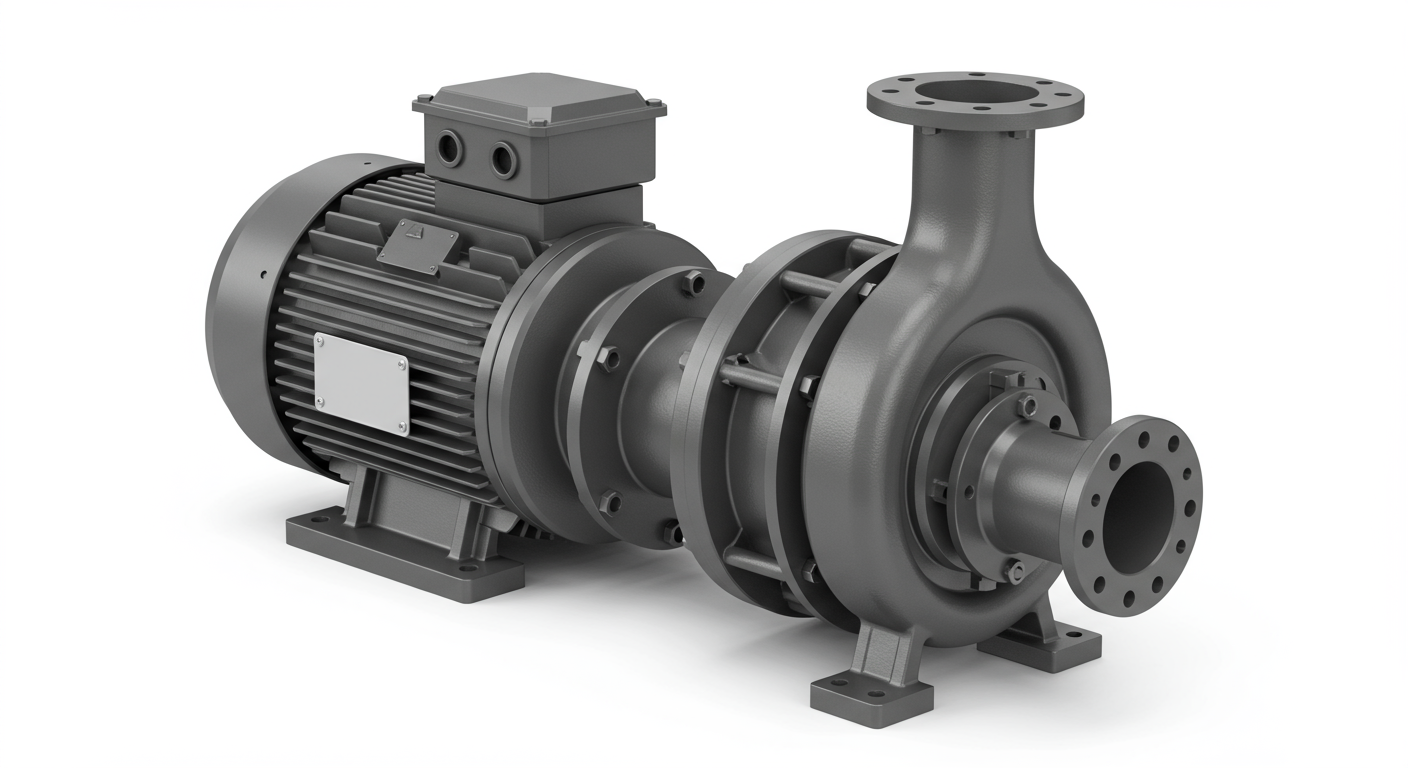
Key Document: Pump System Specification Sheet
FMEA Worksheet
Use the table structure below for your analysis. A sample row has been completed to guide you. You can download a CSV version of this template to work in a spreadsheet program.
FMEA Worksheet: Centrifugal Pump CP-7500
| Item/Function | Potential Failure Mode | Potential Effect(s) of Failure | Severity (S) | Potential Cause(s) of Failure | Occurrence (O) | Current Controls | Detection (D) | RPN | Recommended Actions |
|---|---|---|---|---|---|---|---|---|---|
| Mechanical Seal | Excessive Leakage | Loss of fluid, potential safety hazard | 8 | Seal face wear | 4 | Daily operator rounds | 5 | 160 | Install seal flush line |
Detailed Steps
Follow this step-by-step guide to complete your FMEA. This process provides a logical flow from identifying a potential problem to quantifying its risk.
📊 View Diagram: FMEA Process Flow
Step 1: Identify Potential Failure Modes
First, review the pump components listed in the Pump System Specification Sheet. For each component, brainstorm how it could fail to perform its function. This is the failure mode.
Failure Mode
For the pump, consider components like the bearings, impeller, and motor. What could go wrong with them? * Bearings: Could they seize? Overheat? * Impeller: Could it become eroded? Unbalanced? * Motor: Could the windings short out? Could it fail to start?
List at least three distinct failure modes in the "Potential Failure Mode" column of your worksheet.
Step 2: Determine Effects and Assign Severity (S)
For each failure mode, ask "What is the consequence?" This is the effect of the failure. Think about the impact on the system, safety, and operations. For example, if the pump bearings seize, the effect is a sudden pump stoppage, leading to a complete loss of water circulation.
Next, rate the Severity (S) of that effect on a scale of 1 to 10. A higher number indicates a more severe consequence.
Severity (S) Rating Scale
10: Catastrophic - Failure could cause serious injury or major system destruction. 8-9: Critical - Major disruption to system operation; loss of primary function. 5-7: Moderate - Minor disruption to system operation; performance degradation. 2-4: Minor - Nuisance; slight inconvenience, no impact on performance. 1: No Effect - No discernible effect on the system or personnel.
Step 3: Identify Causes and Assign Occurrence (O)
Now, determine the potential root cause of the failure. For a bearing seizure, causes might include "inadequate lubrication" or "contamination."
Once you identify the most likely cause, rate the likelihood of it happening. This is the Occurrence (O) rating. A higher number means the failure is more likely to occur.
Occurrence (O) Rating Scale
10: Very High - Failure is almost inevitable. 8-9: High - Frequent failures are likely. 5-7: Moderate - Occasional failures are likely. 2-4: Low - Relatively few failures are likely. 1: Remote - Failure is unlikely.
Step 4: Identify Controls and Assign Detection (D)
What current controls are in place to prevent the cause or detect the failure mode? Refer to the "Maintenance & Monitoring" section of the spec sheet. For a bearing failure caused by poor lubrication, a preventive control is the "quarterly lubrication" schedule. A detective control is the "semi-annual vibration analysis," which might spot a problem before it becomes catastrophic.
Based on these controls, rate how likely you are to detect the problem before it causes a major failure. This is the Detection (D) rating. A high number means detection is very unlikely.
Detection (D) Rating Scale
Note that the Detection scale is inverted. A high score is bad—it means you are unlikely to detect the problem.
10: Almost Impossible - No known controls to detect the failure. 8-9: Very Low - Very remote chance of detection. 5-7: Low to Moderate - Controls have a low to moderate chance of detection. 2-4: High - Controls are likely to detect the failure. 1: Almost Certain - Controls will almost certainly detect the failure.
Step 5: Calculate the Risk Priority Number (RPN)
The final calculation combines your three ratings into a single risk score.
Risk Priority Number (RPN)
Calculate the RPN for each failure mode you identified and enter it into the worksheet. This number provides a clear, quantitative basis for prioritizing your efforts. A high RPN signals a critical risk that requires immediate attention.
An Expert Response
Evaluating Your Work
This is a sample expert response, not the only correct answer. Your analysis may differ based on your assumptions and reasoning. Focus on whether your process was logical and your justifications are sound, rather than matching this example exactly.
Below is a completed FMEA worksheet for the Centrifugal Pump CP-7500, demonstrating a thorough analysis for three potential failure modes.
FMEA Worksheet: Centrifugal Pump CP-7500
| Item/Function | Potential Failure Mode | Potential Effect(s) of Failure | Severity (S) | Potential Cause(s) of Failure | Occurrence (O) | Current Controls | Detection (D) | RPN | Recommended Actions |
|---|---|---|---|---|---|---|---|---|---|
| Bearings | Bearing Seizure | Sudden pump stoppage, loss of water circulation. Potential for secondary damage to motor/shaft. | 9 | Inadequate lubrication | 3 | Quarterly bearing lubrication. | Semi-annual vibration analysis. | 4 | 108 |
| Impeller | Impeller Erosion/Corrosion | Reduced flow and pressure. Decreased pump efficiency. | 7 | Abrasive particles or corrosive elements in the water. | 5 | Fluid is potable water (assumed low abrasives). | Daily operator checks of pressure gauges. | 6 | 210 |
| Motor | Motor Fails to Start | Complete loss of pump function. No water circulation. | 8 | Electrical fault (e.g., winding failure, tripped breaker). | 2 | Standard motor protection (fuses, breakers). | Alarm on control panel if motor fails to start on command. | 2 | 32 |
| Mechanical Seal | Excessive Leakage | Loss of fluid, potential slip hazard, housekeeping issues. | 8 | Normal wear and tear of seal faces. | 4 | Daily operator rounds (visual inspection). | Visual leak detection by operators. | 5 | 160 |
Assess Yourself
Self-Evaluation
Use the following criteria to evaluate the quality and completeness of your FMEA worksheet. Compare your work against the expert response, focusing on the logic of your analysis.
- Identification of Failure Modes: Did you identify at least three plausible and distinct failure modes relevant to the components of a centrifugal pump?
- Analysis of Effects and Causes: Is your description of the effects and causes logical and specific to the failure mode you identified?
- Application of S-O-D Ratings: Did you assign ratings for Severity, Occurrence, and Detection that are well-justified by the scenario and the provided rating scales?
- Calculation of RPN: Is the Risk Priority Number (RPN) for each row calculated correctly (S x O x D)?
- Clarity of Recommended Actions: Is your recommended action for the highest RPN specific, actionable, and clearly aimed at reducing the risk (by lowering S, O, or D)?
Learning Progress
By completing this activity, you have practiced the essential skill of conducting a risk assessment for a physical asset. You have applied the Failure Modes and Effects Analysis (FMEA) methodology to systematically identify failure modes, analyze their impact, and prioritize them based on a calculated Risk Priority Number.
Next Steps
Excellent work applying the FMEA process. This foundational skill is a key part of proactive asset management. Please navigate back to the course to continue with the next topic.
