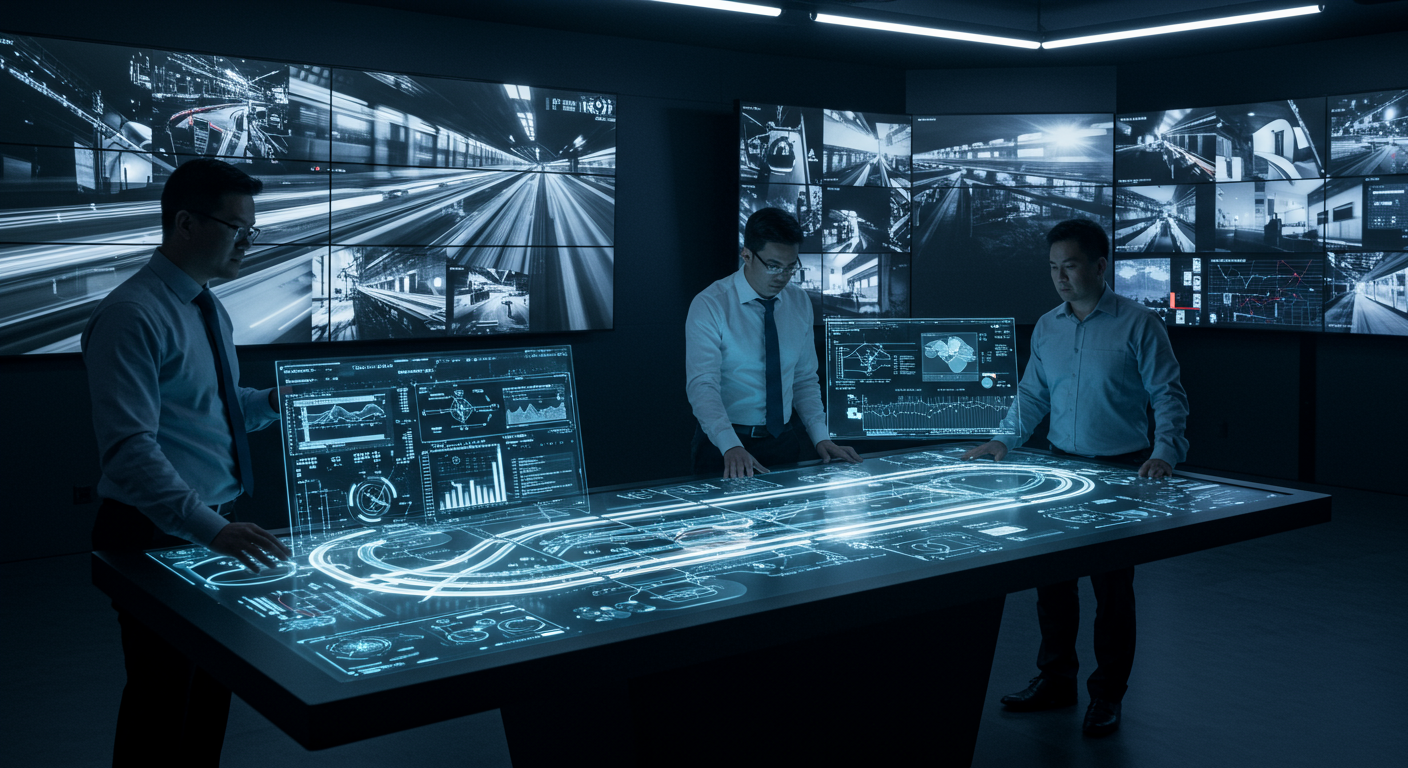
The Case
You’ve just stepped into your new role as the Lead Asset Manager for Northline Metro Transit (NMT), a sprawling public transportation authority responsible for moving millions of people a year. For the past 18 months, your predecessors dedicated immense effort to developing a comprehensive Strategic Asset Management Plan (SAMP). It’s a beautiful document—full of ambitious goals for improving asset reliability, optimizing costs, and ensuring safety across the entire network of trains, tracks, and stations. There’s just one problem: it’s pure theory.
The ink is barely dry on the SAMP, and the executive team, led by CEO Ava Chen, is already asking for results. They want to see data, trends, and proof that the new strategy is more than just a binder on a shelf. The trouble is, NMT has no framework for measuring performance against the SAMP’s goals. Data is collected in silos by the maintenance, operations, and finance departments, but it’s never consolidated, analyzed, or used to make strategic decisions. It’s a classic case of being data-rich but information-poor.
Your predecessor quit under the pressure, and now all eyes are on you. The CEO has made it clear that she needs a way to see the return on investment for the SAMP. You have been tasked with cutting through the departmental silos and designing a performance monitoring and improvement framework from the ground up. This isn't just about creating reports; it's about building the system that will guide NMT’s multi-million dollar asset decisions for the next decade.
Resources and Evidence
You'll need to review the following documents and data to understand the full scope of the challenge at NMT.
Key Document: Email from the CEO
Key Document: Excerpt from the NMT Strategic Asset Management Plan
Q3 Rolling Stock Maintenance Logs
| Asset ID | Asset Type | Maintenance Type | Downtime Hours | Cost USD | Technician Notes |
|---|---|---|---|---|---|
| RC-A-1138 | Railcar-SeriesA | Unscheduled | 48 | 14550.75 | Emergency repair for main propulsion unit. Unexpected failure of primary capacitor bank led to component burnout. |
| SIG-B42-007 | Signal-Block42 | Scheduled | 4 | 850.0 | Standard quarterly diagnostic and sensor calibration. All systems nominal. |
| TS-C-901 | Track-Switch-C9 | Unscheduled | 18 | 8200.5 | Switch mechanism jammed due to foreign object. Emergency repair required to clear and realign. |
| PS-NRT-04 | Power-Substation | Scheduled | 8 | 2100.0 | Annual load testing and breaker inspection. Routine procedure. |
| RC-B-2049 | Railcar-SeriesB | Unscheduled | 72 | 22300.0 | Complete HVAC system burnout. Required full replacement. Suspect voltage surge. |
| RC-A-1101 | Railcar-SeriesA | Scheduled | 2 | 450.25 | Standard 5000-mile inspection and lubrication service for door mechanisms. |
| SIG-A15-012 | Signal-Block15 | Unscheduled | 24 | 9875.0 | Unexpected failure in the signal relay. Replaced relay and tested connectivity. Emergency repair. |
| RC-B-2077 | Railcar-SeriesB | Scheduled | 3 | 620.5 | Brake pad wear check and fluid top-off. Within service limits. |
| TS-D-455 | Track-Sensor-D4 | Unscheduled | 6 | 3500.0 | Sensor reporting false positives. Water ingress detected. Replaced sensor and sealed housing. |
| PS-SOU-02 | Power-Substation | Unscheduled | 36 | 18400.0 | Transformer overheating. Emergency shutdown and coolant flush. Component burnout narrowly avoided. |
| RC-A-1121 | Railcar-SeriesA | Scheduled | 4 | 900.0 | Scheduled replacement of interior lighting ballasts and bulbs. |
| SIG-B42-011 | Signal-Block42 | Unscheduled | 12 | 6750.8 | Communications module failure. Replaced module and ran diagnostics. Emergency repair. |
| RC-B-2050 | Railcar-SeriesB | Scheduled | 2 | 375.0 | Standard inspection and software update for the passenger information system. |
| RC-A-1138 | Railcar-SeriesA | Unscheduled | 8 | 4100.0 | Passenger door malfunction; would not close. Replaced faulty proximity sensor. Emergency repair. |
| PS-NRT-04 | Power-Substation | Unscheduled | 5 | 2900.0 | Vandalism damage to exterior fencing and conduit. Minor repairs needed. |
| RC-A-1109 | Railcar-SeriesA | Scheduled | 3 | 550.0 | Wheel wear measurement and routine lubrication service. All within tolerance. |
| TS-C-903 | Track-Switch-C9 | Unscheduled | 22 | 11500.0 | Hydraulic line ruptured on switch actuator. Unexpected failure. Replaced line and refilled fluid. |
| RC-B-2065 | Railcar-SeriesB | Scheduled | 6 | 1500.0 | Scheduled bogie assembly deep clean and inspection. |
| SIG-A15-002 | Signal-Block15 | Unscheduled | 30 | 10200.25 | Main logic board experienced a component burnout after a power flicker. Replaced board. |
| RC-A-1115 | Railcar-SeriesA | Unscheduled | 16 | 7800.0 | Broken axle sensor. Emergency repair to prevent further damage. |
📊 View Diagram: Current (Siloed) Reporting Process
Your Task
Your assignment is to develop a formal proposal for the CEO that outlines a complete performance monitoring and improvement framework for Northline Metro Transit. This proposal should be a professional document that directly addresses the CEO's request and uses the provided resources as a basis for your recommendations.
As the new Lead Asset Manager, your proposal must be clear, convincing, and actionable. It should demonstrate to the CEO that you not only understand the strategic goals but can also translate them into a tangible system for driving performance. Your document should present a complete vision that addresses four key areas:
- Key Performance Indicators (KPIs): Define a set of specific, measurable KPIs directly derived from the SAMP's strategic goals. Explain why each KPI is important and how it would be calculated using the types of data available at NMT.
- Reporting Structure: Describe your concept for a performance dashboard. What key information would it display? Sketch out the main components or visualizations and explain how they would give executives at-a-glance insights into asset performance.
- Performance Review Cadence: Propose a schedule of performance review meetings (e.g., weekly, monthly, quarterly). Define the purpose, attendees, and a sample agenda for each type of meeting.
- Continuous Improvement Process: Explain how the insights generated from this framework will be used. Outline a process for identifying performance gaps, launching improvement projects, and tracking their impact.
Submit Your Work
Insert DropBox here
Next Steps
Congratulations on completing the case study assessment. You have tackled a complex, real-world challenge in asset management. Please ensure you have uploaded your final proposal document.
Once your submission is complete, you can navigate back to the main course page to continue your learning journey.
