
Introduction
If you've ever looked at a major piece of infrastructure—a bridge, a power plant, a water treatment facility—and wondered about its story, you're already thinking like an asset manager. These assets don't just appear. They are born from an idea, live a long and productive life of service, and are eventually retired. This entire journey is what we in the field call the asset lifecycle.
Understanding this lifecycle isn't an academic exercise; it's the fundamental framework that guides every strategic decision we make. It's how we ensure a city's water supply remains safe and reliable, how we keep the lights on, and how we make sure public funds are invested wisely for the long term. This model allows us to move from simply fixing things when they break to strategically managing the value, risk, and performance of our assets from their conception to their final farewell. In this reading, we'll walk through this journey, stage by stage, to see how theory translates into practice.
The Framework for Strategic Decision-Making
At its core, the asset lifecycle is a model that describes the stages an asset goes through from its creation to its disposal. Thinking in terms of a lifecycle forces a long-term perspective. You stop asking "What's the cheapest way to build this?" and start asking "What's the best way to deliver this service over the next 50 years?" This shift is the cornerstone of modern physical and infrastructure asset management. It’s about managing the whole-life value of the asset.
Asset Lifecycle
Let's visualize this process. While it can be broken down in various ways, a common representation shows a continuous loop, because the end of one asset's life often informs the beginning of the next.
📊 View Diagram: The Asset Lifecycle Stages
Now, let's break down what happens in each of these stages.
Stage 1: Plan & Acquire
Every asset begins with a question: "What do we need?" This first stage is where an organization identifies a need for a new asset or a significant upgrade to an existing one. This is arguably the most critical phase, as the decisions made here have the longest-lasting impact on costs and performance. A poorly planned asset will be a financial and operational burden for its entire life.
The activities in this stage are all about due diligence: * Needs Assessment: Why is this asset necessary? What service level is required? * Feasibility Studies: Can we do this? What are the technical, economic, and environmental constraints? * Options Analysis: What are the different ways we can meet this need? Should we build a new power plant, invest in a large-scale solar farm, or implement energy-saving programs? * Design and Engineering: Developing the detailed specifications for the chosen option. * Procurement and Construction: The physical creation or acquisition of the asset.
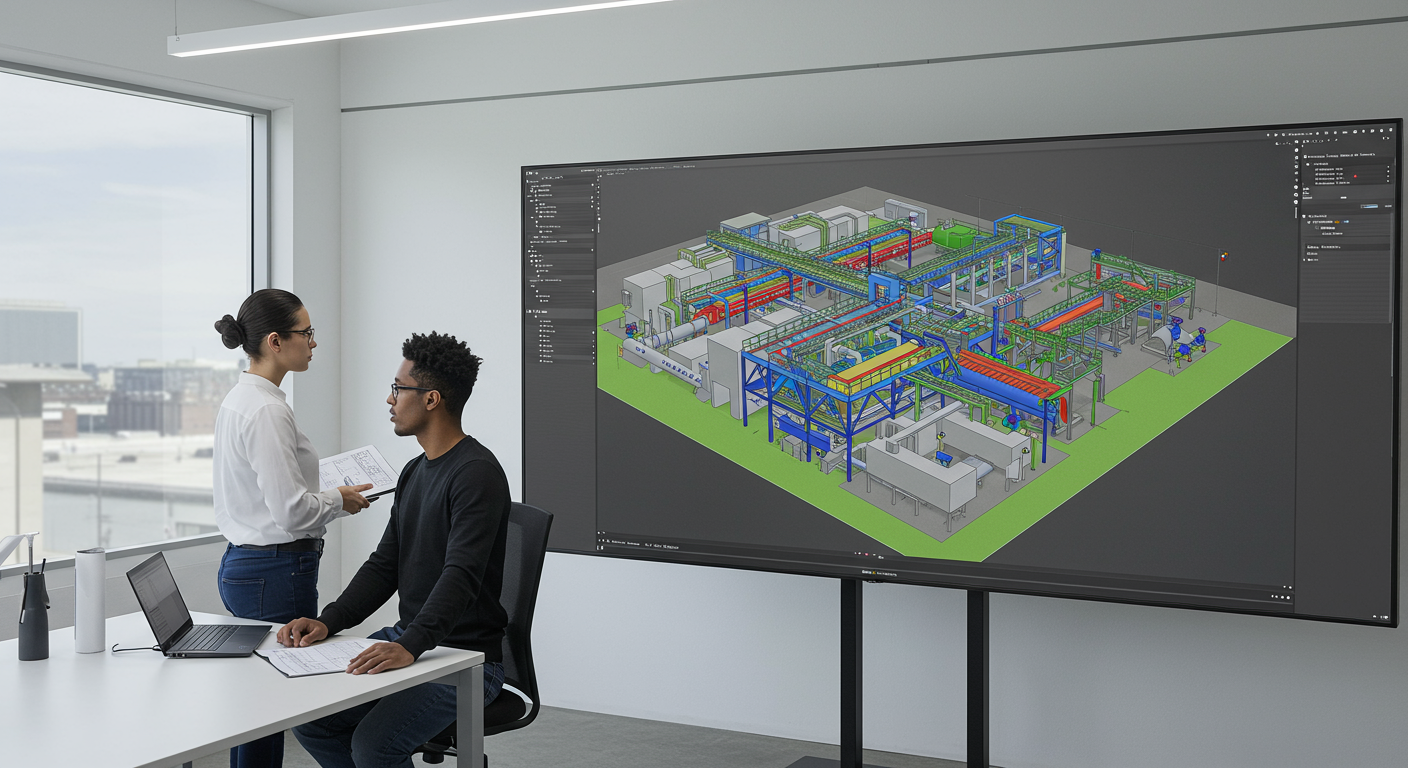
This is where robust Capital Planning comes into play. You are making multi-million (or billion) dollar investment decisions. You have to get them right. This involves forecasting future demand, analyzing risks, and securing funding. Modern tools like Building Information Modeling (BIM) are transforming this stage, allowing teams to create detailed digital replicas of assets before a single shovel hits the ground.
Mentor's Corner: The Power of Early Decisions
Remember this: your ability to influence the total cost of an asset is highest during the planning stage and drops dramatically once it's built. A small design change that saves 10% in future energy costs is easy on paper. Trying to retrofit that same change ten years into the asset's life could be prohibitively expensive. Spend the time and resources to get the planning right.
Stage 2: Operate & Maintain
Once an asset is commissioned, it enters the longest and typically most costly phase of its life: operations and maintenance. This is where the asset performs its intended function, whether it's a pipeline transporting natural gas or a building providing office space. The goal of the asset manager during this stage is to ensure the asset operates safely, reliably, and efficiently.
The key activities revolve around Operations and Maintenance (O&M). This isn't just about fixing things when they break (corrective maintenance). A mature asset management program focuses heavily on proactive strategies:
- Preventive Maintenance: Scheduled work based on time or usage to prevent failures (e.g., changing the oil in a generator every 500 hours of operation).
- Predictive Maintenance (PdM): Using sensors and data analysis to predict when a component might fail, allowing for maintenance to be scheduled just in time.
- Condition Monitoring: Regularly assessing the health of an asset through inspections and testing.
This is where the concept of Lifecycle Cost becomes tangible. The initial purchase price of a pump is one thing, but the cost of the electricity to run it and the maintenance to keep it operational for 20 years can far exceed that initial price.

The data gathered during O&M is invaluable. A simple maintenance log can reveal patterns that inform everything from spare parts inventory to future design specifications. Let's look at a simplified example of what this data might look like for a set of water pumps.
Q3 Maintenance Log - North Pumping Station
| Asset ID | Date | Maintenance Type | Action Taken | Cost USD |
|---|---|---|---|---|
| NP-PUMP-01 | 2023-03-15 | Preventive | Quarterly lubrication and vibration check | 75.5 |
| NP-PUMP-02 | 2023-04-10 | Preventive | Annual seal inspection | 95.0 |
| NP-PUMP-03 | 2023-04-12 | Preventive | Filter cleaning and pressure check | 60.0 |
| NP-PUMP-02 | 2023-05-21 | Corrective | Impeller replacement due to excessive wear | 950.0 |
| NP-PUMP-01 | 2023-06-15 | Preventive | Quarterly lubrication and vibration check | 75.5 |
| NP-PUMP-03 | 2023-07-18 | Preventive | Lubrication and alignment check | 85.0 |
| NP-PUMP-01 | 2023-08-05 | Corrective | Motor bearing failure, motor replaced | 2100.75 |
| NP-PUMP-02 | 2023-08-25 | Preventive | Routine lubrication service | 50.0 |
| NP-PUMP-02 | 2023-09-14 | Corrective | Impeller replacement, recurring cavitation issue | 1025.0 |
| NP-PUMP-03 | 2023-10-15 | Preventive | Quarterly seal inspection and test | 90.0 |
| NP-PUMP-01 | 2023-10-16 | Preventive | Quarterly lubrication and vibration check | 75.5 |
| NP-PUMP-03 | 2024-01-11 | Preventive | Filter cleaning and pressure check | 60.0 |
| NP-PUMP-02 | 2024-02-01 | Corrective | Casing crack repair and re-evaluation | 780.2 |
Looking at data like this, an asset manager might notice that NP-PUMP-02 requires frequent, costly corrective maintenance. This is a data-driven insight that triggers a new set of questions. Which leads us to our next stage.
Stage 3: Renew & Adapt
No asset lasts forever. Components wear out, technology becomes obsolete, and service demands change. The Renew & Adapt stage is where we make critical decisions about the future of an existing asset. It's a crossroads: do we continue to maintain it as-is, give it a major overhaul, or is it time to plan for its replacement?
The decision is driven by data from the O&M phase and a forward-looking analysis of cost, risk, and performance. * Repair: Do we fix the failing component? This is a short-term solution. * Refurbish/Overhaul: Do we perform a major intervention to restore the asset to its original condition or even upgrade its performance? This can extend its life significantly. * Replace: Is the asset no longer economically viable to maintain? Is it failing to meet performance or regulatory standards? It may be time to replace it entirely, which kicks off a new "Plan & Acquire" cycle.
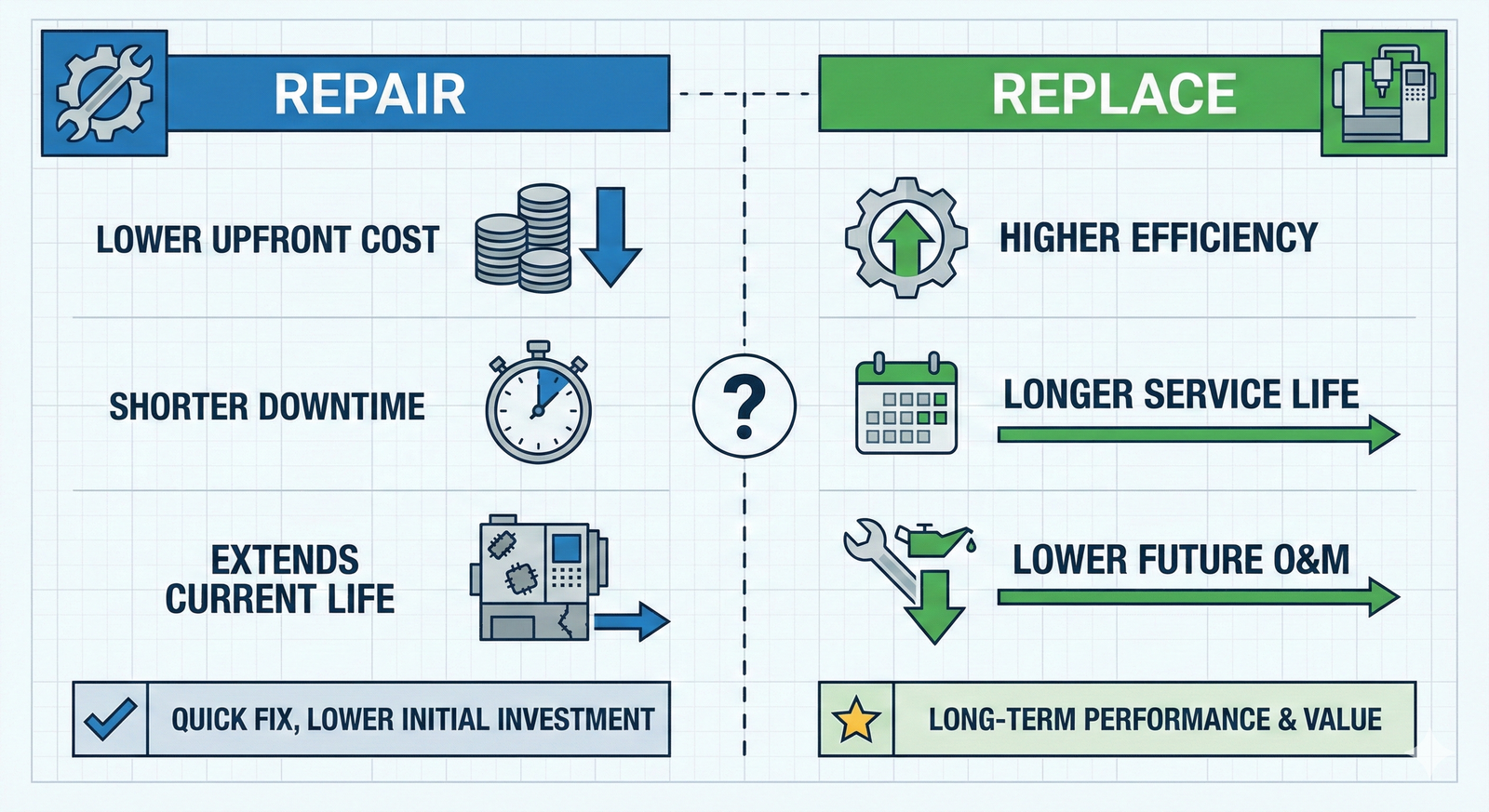
This is where the holistic view of the asset lifecycle pays dividends. An organization that only looks at the immediate O&M budget might choose to repeatedly repair a failing asset because the individual repair cost is low. An organization using a lifecycle approach will analyze the cumulative repair costs, the increasing risk of failure, and the poor performance, and conclude that replacement is the more cost-effective long-term solution, even if the upfront cost is higher.
Stage 4: Dispose
All assets eventually reach the end of their useful life. The disposal stage is the final phase, where an asset is decommissioned, dismantled, and removed from service. This stage is often overlooked in initial planning but can carry significant costs and risks.
Asset Disposal
Proper disposal isn't as simple as just tearing something down. It involves: * Decommissioning: Safely taking the asset offline. For a nuclear power plant, this is an incredibly complex and lengthy process. * Environmental Remediation: Cleaning up any contamination left by the asset's operation. An old gas station, for example, may require soil remediation. * Regulatory Compliance: Adhering to all local and national laws governing waste and demolition. * Value Recovery: Can parts of the asset be salvaged? Can the materials be recycled? Sometimes, an old asset can be sold, generating revenue that offsets disposal costs.
Future Liability
Failing to properly plan and budget for asset disposal can have serious consequences. Environmental cleanup costs can be enormous, and legal penalties for non-compliance are severe. A responsible asset manager considers disposal costs as part of the initial lifecycle cost analysis from day one.
The end of one asset's life is often the beginning of another. The land from a decommissioned factory might be remediated and repurposed for a new commercial development. The lessons learned from the failures of an old bridge design are fed back into the "Plan & Acquire" stage for its replacement. This is why the lifecycle is a continuous, powerful loop of learning and improvement.
Closing
As you can see, the asset lifecycle model is far more than a simple diagram. It is a dynamic and essential framework for any professional in physical and infrastructure asset management. By understanding and applying this model, you shift from a reactive, short-term mindset to a proactive, strategic one. You learn to see an asset not as a static object, but as a living entity with a story that you, the asset manager, are responsible for guiding.
Mastering the activities and decisions within each stage—from the critical foresight required in capital planning to the data-driven diligence of O&M and the responsible management of disposal—is what separates good asset managers from great ones. This lifecycle perspective is what ensures our infrastructure is resilient, our services are reliable, and our investments deliver value for generations to come. It's the core of what we do, and it's why this profession is so challenging and rewarding.
Learning Outcomes
By completing this reading, you have taken a significant step in understanding the core of professional asset management. You can now explain the asset lifecycle delivery model and its critical importance in making strategic, long-term decisions for physical and infrastructure assets.
Furthermore, you are now able to describe the main activities and decisions that occur within each stage of an asset's life. You can articulate the purpose of Capital Planning in the acquisition phase, the key functions of Operations and Maintenance (O&M), the critical choices made during renewal, and the responsibilities involved in Asset Disposal. Most importantly, you can see how these stages connect and how a holistic understanding of Lifecycle Cost is essential for success in the field.
Assess Yourself
Let's check your understanding of the key concepts we've covered. This short quiz is for your own practice and will help solidify your knowledge.
❓ Knowledge Check
Test your understanding of the key concepts from this section.
Next Steps
Excellent work. You've just walked through the entire journey of an asset from a manager's perspective. This foundational model will be the basis for many of the more advanced topics we'll explore. When you're ready, please navigate back to the course page to continue.
