The Case
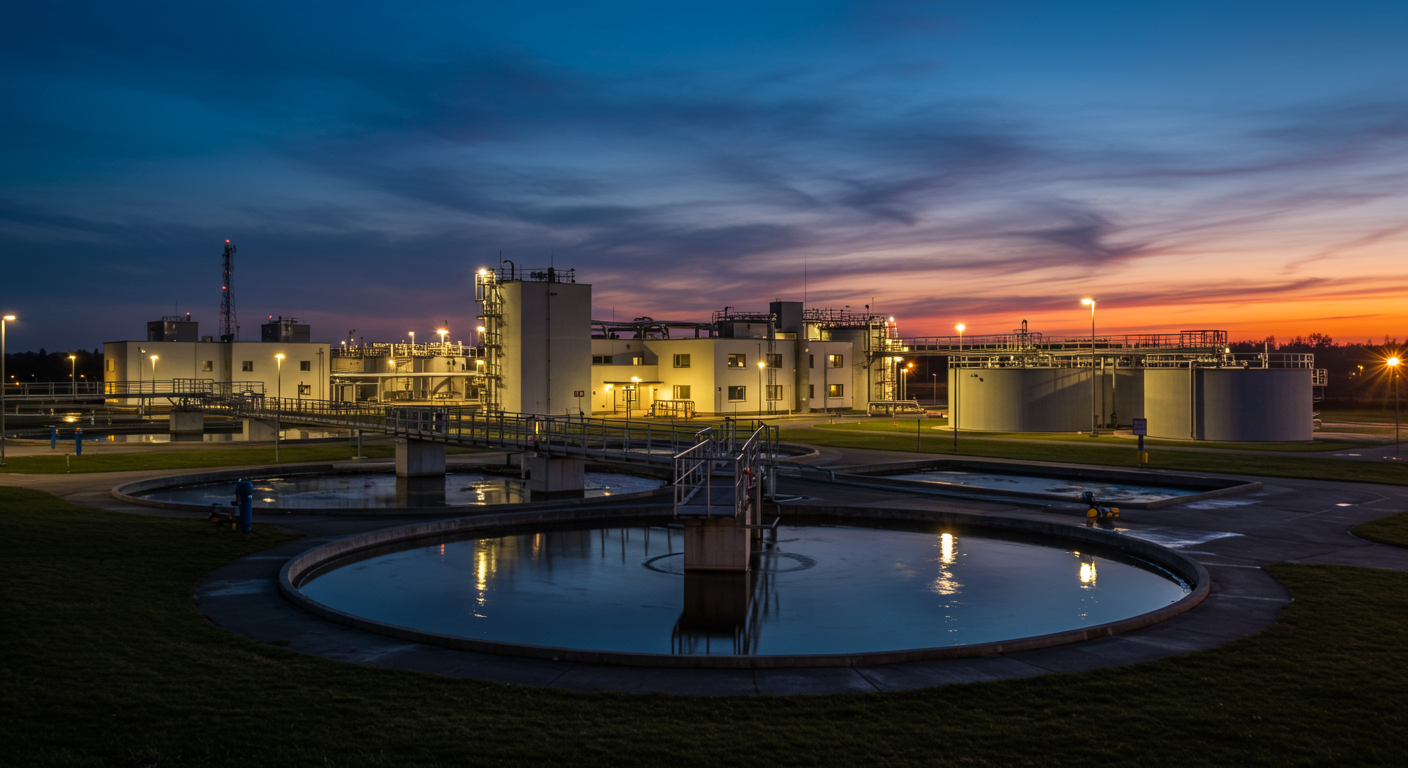
The city of Riverbend is booming. What was once a sleepy town is now a magnet for new families and businesses, and its infrastructure is straining at the seams. Nowhere is this more apparent than in its water supply. The current treatment plant is operating at 95% capacity, and projections show demand will outstrip supply within three years. You are Alex Chen, the lead Asset Manager for Riverbend's Public Works department, and the responsibility for solving this crisis has landed squarely on your desk.
Two distinct paths have emerged, each with a vocal group of supporters on the city council. The first option is a "Greenfield" project: constructing a brand-new, state-of-the-art water treatment facility on undeveloped land the city owns on its northern edge. This promises modern efficiency and a clean slate, designed perfectly for Riverbend's future needs. It's the straightforward, predictable choice.
The second option is more complicated. A "Brownfield" site, the old Northwood Industrial Plant, sits just outside the city limits. It was decommissioned a decade ago and includes a defunct, smaller-scale water treatment facility. Acquiring and retrofitting this site could be a shortcut, potentially saving time and money. However, the site has a history. Decades of industrial use mean potential environmental contamination, and the existing infrastructure is a black box of unknowns.
The pressure is mounting. The mayor wants a decision by the end of the quarter. The finance committee is wary of the massive capital outlay for a Greenfield project, while the environmental commission is raising red flags about the potential cleanup costs and liabilities of the Brownfield site. Your team has been working around the clock to gather the preliminary data, but the picture is far from clear. This isn't just about pipes and pumps; it's about Riverbend's future. Your recommendation will shape the city's public health, financial stability, and environmental legacy for decades to come.
Resources and Data
You have the following documents and data to inform your analysis. Review them carefully to understand the trade-offs between the two options.
Greenfield Project
Brownfield Project
Project Financial Projections: Greenfield vs. Brownfield
| Project Option | Estimated Capital Expenditure (CapEx) | Estimated Annual Operating Expenditure (OpEx) | 20-Year Net Present Value (NPV) | Contingency Fund Allocation |
|---|---|---|---|---|
| Greenfield | 120.0 | 3.5 | 175.5 | 10 |
| Brownfield | 75.0 | 5.2 | 171.2 | 28 |
Key Document: MEMORANDUM: Preliminary Environmental Assessment of Northwood Site
📊 View Diagram: Comparative Project Timelines
Your Task
As Alex Chen, Lead Asset Manager, your task is to prepare a formal recommendation for the Riverbend City Council. You must analyze the financial, environmental, and timeline data to evaluate the two asset acquisition options. Your final output should be a clear, decisive recommendation that selects either the Greenfield or the Brownfield project. Most importantly, you must provide a compelling justification for your choice, demonstrating that you have considered all the risks and benefits.
How to Structure Your Analysis
A strong recommendation requires a clear structure. Follow these four steps:
- Define the Problem: Briefly state the core issue facing the city of Riverbend.
- Identify Core Issues: Analyze the data to compare the pros and cons of each option across cost, timeline, and risk.
- Identify Possible Solutions: Frame the Greenfield and Brownfield options as two distinct solutions to the problem.
- Recommend a Best Solution: State your final choice clearly and provide a robust rationale, using evidence from the resources to support your argument.
Guiding Questions
Use these questions to focus your analysis and build your recommendation.
- What is the core problem facing the city of Riverbend, and what is the required timeline for a solution?
- Based on the financial data, which project appears more favorable from a pure Net Present Value (NPV) perspective? What does the difference in contingency funding tell you about the perceived risk of each project?
- According to the environmental memo, what are the three main risks associated with the Brownfield site? How might these risks impact the project's budget and timeline?
- Looking at the Gantt chart, what is the total estimated duration for each project? Which project gets a new facility operational sooner, and by how much?
- What are the non-financial benefits of the Greenfield approach? What are the non-financial benefits of the Brownfield approach (e.g., land reuse, urban renewal)?
- How would you define the primary trade-off in this decision? Is it cost vs. time, cost vs. risk, or something else?
- If you choose the Brownfield option, what specific steps would you recommend to mitigate the environmental and construction risks?
- Which option would you ultimately recommend to the city council? Prepare to defend your choice against the arguments of the opposing view.
An Expert Response
A Sample Response
The following is one possible expert-level response. A strong analysis is key, and other valid recommendations could be made with different, well-reasoned justifications. Use this to compare against your own thinking.
Recommendation to the Riverbend City Council: Pursue the Brownfield Site Acquisition and Redevelopment
1. Problem Definition: The city of Riverbend faces an imminent water capacity shortfall, with demand projected to exceed supply within 36 months. A new or upgraded water treatment asset is required to ensure public health and support continued community growth.
2. Analysis of Options: Our analysis compared the construction of a new Greenfield facility against the acquisition and redevelopment of the Brownfield Northwood site.
-
Financial: While the Greenfield project has a more predictable cost structure, the Brownfield project presents a slightly more favorable 20-Year NPV. The high contingency fund allocated for the Brownfield project ($7.5M, assuming a $30M CapEx) realistically accounts for the significant environmental risks outlined in the Terra Consulting memo. This financial model suggests that even with substantial remediation, the Brownfield option remains financially viable over the long term.
-
Timeline: The Greenfield project offers a slightly faster path to completion, with an estimated duration of 42 months versus 45 months for the Brownfield. However, this three-month difference is marginal in the context of a multi-decade asset lifecycle. The Brownfield timeline also front-loads the highest risk activities (assessment and remediation), providing clearer go/no-go decision points.
-
Risk and Strategic Value: The primary risk of the Greenfield project is the potential for permitting delays and public opposition to new construction on undeveloped land. The Brownfield project's risks are more technical and contained: soil contamination and structural unknowns. While significant, these risks are quantifiable through a Phase II assessment and can be managed with a robust engineering and environmental plan. Strategically, redeveloping the Brownfield site aligns with sustainability goals by reusing existing land, preventing urban sprawl, and cleaning up a known environmental hazard.
3. Recommendation and Justification: I recommend that the council approve the initial funding for the acquisition and Phase II Environmental Assessment of the Northwood Brownfield site.
This recommendation is based on the conclusion that the Brownfield project, despite its higher risk profile, offers superior long-term strategic and financial value. The slightly lower NPV, combined with the significant non-financial benefits of land recycling and blight removal, makes it the more responsible choice.
Our immediate next step will be to commission the Phase II assessment. The results of this study will provide a firm estimate for remediation costs and timelines. This creates a critical decision gate for the council; if the remediation costs prove to be prohibitively expensive (e.g., exceeding the allocated contingency), we can pivot to the Greenfield option having lost only six months and a relatively small initial investment. This phased approach provides the best balance of fiscal prudence and decisive action to solve Riverbend's water crisis.
Assess Yourself
Evaluate Your Work
Review your own analysis and recommendation. Use the following criteria to assess the quality of your response and identify areas for improvement.
- Problem Identification: Your response clearly and concisely states the core problem, including the urgency and key constraints.
- Data-Driven Analysis: You effectively use specific data points from the financial table, environmental memo, and timeline diagram to compare the two options.
- Risk Assessment: You identify the primary risks for both the Greenfield and Brownfield options and explain how they impact the decision.
- Evaluation of Trade-offs: Your analysis goes beyond a simple pro/con list and explicitly discusses the trade-offs between cost, time, and risk.
- Clarity of Recommendation: You make a clear, unambiguous choice and avoid hedging.
- Strength of Justification: Your rationale is logical, well-structured, and directly supported by the evidence you analyzed.
Learning Progress
By working through the Riverbend Dilemma, you have practiced the essential skills of an asset manager. You have successfully applied a structured process to manage asset acquisition by evaluating distinct options, analyzing complex data, and weighing financial, operational, and strategic factors to form a defensible recommendation.
Next Steps
You have successfully completed this case study. Your analysis demonstrates your ability to apply critical thinking to a realistic asset management challenge. Please navigate back to the course to continue your learning journey.
