
From Blueprint to Reality: Creating and Acquiring Assets
Welcome to Module 2. In our last module, we established the strategic foundations of asset management. We answered the "why." Now, we shift our focus to the "how." How does a new asset—a critical piece of infrastructure like a power substation, a fleet of vehicles, or a new software system—come into existence? This module walks you through the asset creation and acquisition phase, a critical stage in the asset lifecycle where strategic plans are transformed into tangible, operational assets.
This process is where investment decisions become reality. It's a phase demanding rigor, foresight, and a disciplined approach to ensure that the assets we acquire deliver value for their entire operational life.
Think of this module as the "origin story" for physical assets. We're going from an idea on paper to a functioning part of an organization's portfolio. As we go, pay close attention to how each step logically follows the last. This will help you build a mental map of the entire acquisition process.
The Starting Point: The Business Case
Before a single dollar is spent or a shovel hits the ground, every potential asset acquisition begins with a question: "Is this a worthwhile investment?" The tool we use to answer this question is the business case.
A strong business case does more than just ask for money. It tells a story, backed by data, that justifies the expenditure. It outlines the problem or opportunity, evaluates different solutions, and recommends a course of action that aligns with the organization's strategic goals. This is the foundation of sound Business Case Development and a core skill for any asset manager.
To build a compelling business case, you must have a firm grasp of the financial implications. This brings us to two of the most fundamental concepts in finance and asset management: Capital Expenditure (CAPEX) and Operational Expenditure (OPEX).
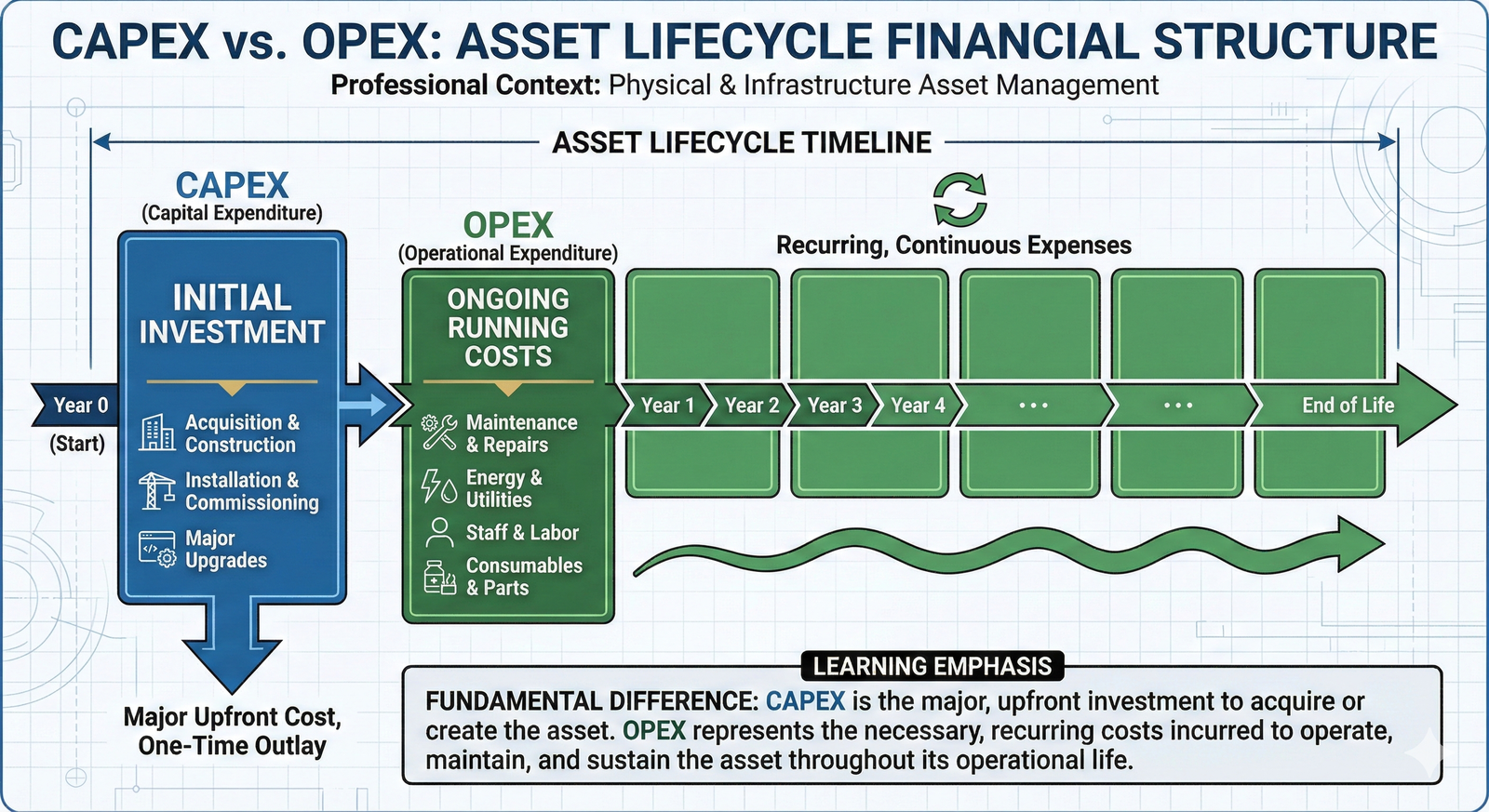
Simply put, CAPEX is the money you spend to buy or build the asset, while OPEX is the money you spend to run and maintain it. A common mistake is to focus only on minimizing the initial CAPEX, without considering the long-term OPEX, which can often dwarf the initial purchase price. This is why effective Capital Planning and Budgeting must account for the total cost of ownership.
This holistic financial perspective is known as Whole-Life Costing. It's a critical discipline that ensures decisions made today are financially sustainable for decades to come.
This concept of Whole-Life Costing is a game-changer. It shifts your thinking from "What's the cheapest way to buy this?" to "What's the smartest way to own this?" To explore this crucial topic in more detail, we've prepared an in-depth reading.
Reading: The Principles and Practice of Whole-Life Costing
Launch the reading to explore a key course topic.
Now that you understand the financial thinking behind an acquisition, let's build the skills to put it into a formal proposal. The following activity will guide you through the process of creating a business case from scratch. This is a foundational skill you'll use throughout your career.
Skills Practice: How to Develop a Compelling Business Case for Asset Acquisition
Launch the interactive skills practice to build and apply your new abilities.
Excellent. You've learned the structure of a business case. Now, it's time to apply that knowledge in a realistic scenario. The following case study challenges you to step into the role of an asset manager for a municipal water authority and make a recommendation on a major capital project.
Case Study: Case Study: Greenfield vs. Brownfield Water Treatment Plant Acquisition
Launch the interactive case study to analyze a real-world scenario.
From Decision to Delivery: Procurement and Project Management
Once a business case is approved and funding is secured, the focus shifts to execution. How will you acquire the asset? Will you build it from scratch, buy it off-the-shelf, or enter a long-term lease? This is the domain of Procurement Strategies.
The procurement process is often formalized through documents like a Request for Proposal (RFP) or a Tender. These are structured processes designed to ensure competition, transparency, and value for money.
The world of procurement is complex, with many different models and legal frameworks. To give you a broader perspective on modern approaches, including innovative methods like public-private partnerships, we have another reading for you.
Reading: Modern Procurement Strategies for Infrastructure Assets
Launch the reading to explore a key course topic.
Whether the asset is being constructed or simply purchased and installed, its delivery must be managed carefully. This requires strong Project Management in Asset Acquisition skills to keep the acquisition on schedule, within budget, and to the required quality standards.
Going Live: Commissioning and Handover
The final stage of acquisition is arguably the most important for the asset's long-term success: Commissioning and Handover. This isn't just about "flipping a switch." It's a systematic process to test and verify that the new asset performs as specified.
This is all guided by a detailed Commissioning Plan. Once commissioning is complete and all parties agree that the asset is ready, the formal handover occurs. At this point, the asset is officially entered into the organization's Asset Register, a master database that will track it for the rest of its life.
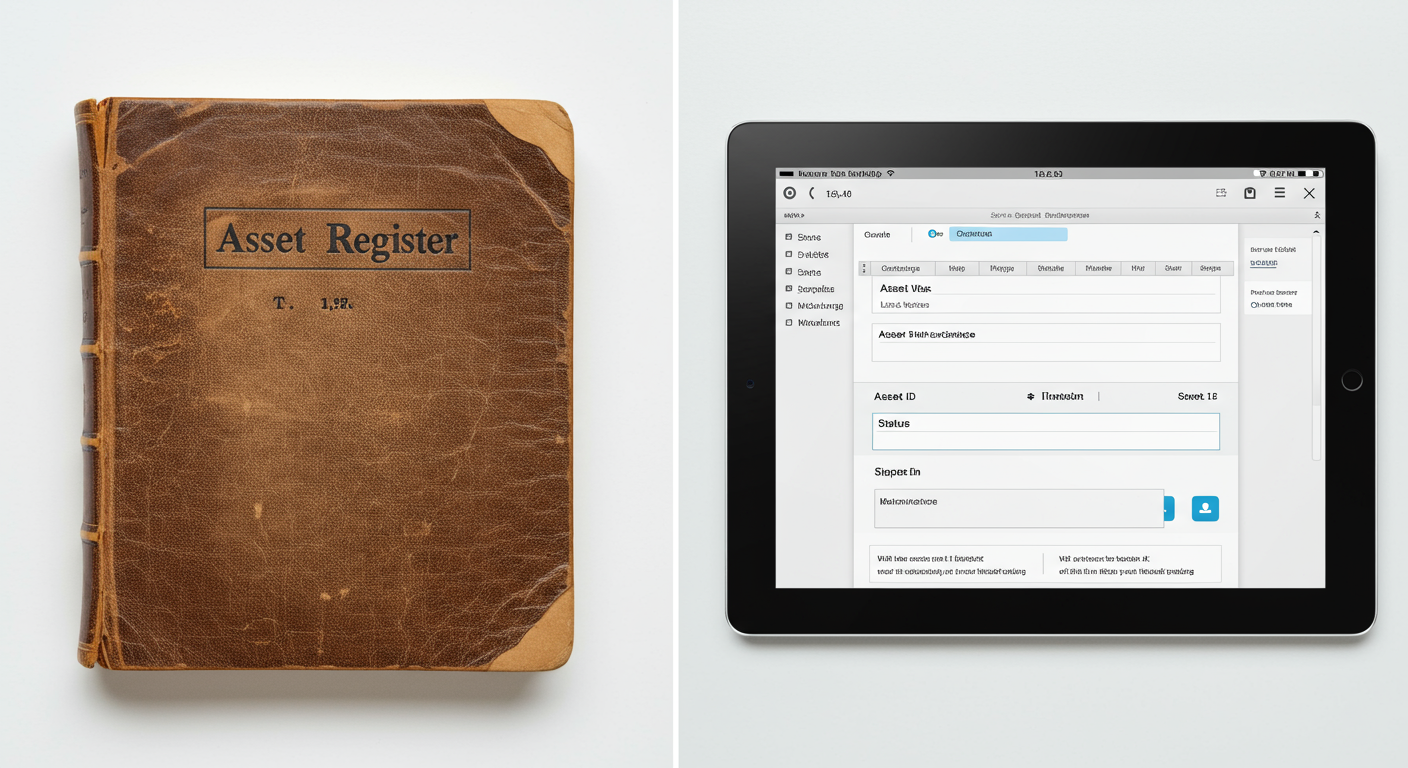
With the handover complete, the asset officially transitions from the acquisition phase to the operational phase, where it will begin its long life of service delivery. We will cover the operational phase in the next module.
Assess Yourself
It's time for a quick check-in. This ungraded quiz is a great way to see how well you've grasped the key concepts and vocabulary from this module. Use the feedback to reinforce your understanding before moving on.
❓ Knowledge Check
Test your understanding of the key concepts from this section.
Wrapping Up
Congratulations on completing Module 2! You've navigated the entire journey of bringing a new asset to life, from the initial idea to its operational launch. You've learned how to justify an acquisition by developing a robust business case, how to evaluate its full financial impact using whole-life costing, and how to manage the complex processes of procurement, project management, and final handover. These are the skills that ensure an organization's investments are smart, sustainable, and aligned with its long-term strategy. Well done!
Next Steps
You have successfully completed the work for this module. Please return to the course homepage to review your graded assessments for this module and to begin your work on the next one.