
The Skill
Developing a business case is the process of creating a structured, persuasive argument to justify a significant investment, such as the acquisition of a new physical or infrastructure asset. It is a formal document that moves beyond a simple request and provides a comprehensive analysis for decision-makers.
A strong business case evaluates a proposed investment from all critical angles. It defines the business problem or opportunity, analyzes the financial implications—including costs, benefits, and return on investment—assesses potential risks, and aligns the acquisition with the organization's strategic objectives. The final output is a clear, data-driven recommendation that enables leadership to make an informed and defensible decision.
Why Is This Skill Important?
In any organization, capital is a finite resource. The ability to craft a compelling business case is a core competency for any professional in asset management. It is the primary tool for securing the funding needed to maintain, upgrade, and expand an organization's asset base, ensuring it can meet its operational and strategic goals.
This skill is not just about "getting a yes." A well-researched business case ensures that acquisitions are strategically sound, financially viable, and aligned with long-term objectives. It provides a transparent and logical foundation for major spending, protecting the organization from reactive or poorly justified purchases. Mastering this skill demonstrates your ability to think strategically and manage resources effectively, marking you as a valuable contributor to the organization's success.
Your Task
Your task is to develop a complete business case for acquiring a new asset. You will be provided with a memo from an operations manager outlining a pressing need, along with a dataset containing relevant financial information.
Using these resources, you will structure, analyze, and write a formal business case document. Your goal is to create a persuasive and professional justification for the proposed capital expenditure, culminating in a clear recommendation for senior management.
Your Objective
Follow these high-level steps to complete the task: 1. Review the scenario outlined in the provided memo. 2. Analyze the cost, benefit, and savings data. 3. Structure your document using the standard sections of a business case. 4. Write the full business case, incorporating the data into a persuasive financial analysis. 5. Conclude with a clear and decisive recommendation.
Resources and Data
You will use the following documents and data to build your business case. The memo provides the context and qualitative justification, while the dataset provides the quantitative information needed for your financial analysis.
Key Document: Memo: Request for New CNC Machine
CNC Machine Acquisition: Cost-Benefit Data
| Category | Description | Type | Amount (USD) |
|---|---|---|---|
| Purchase Price | Upfront capital expenditure for the Haas UMC-1000 5-Axis CNC machine. | One-Time Cost | 455000 |
| Installation & Setup | Cost for professional installation, floor reinforcement, electrical work, and integration into the existing production line. | One-Time Cost | 24500 |
| Operator Training | Cost for a 5-day intensive training program for four machine operators and two maintenance staff. | One-Time Cost | 12000 |
| Old Machine Maintenance | Current annual cost for service contracts, replacement parts, and unplanned downtime on the two legacy CNC machines being replaced. This cost is eliminated with the new machine. | Annual Cost | 62500 |
| New Machine Maintenance | Represents the annual savings from the reduction in maintenance costs. The new machine's service plan is $12,500/year, a $50,000 reduction from the old cost of $62,500/year. | Annual Savings | 50000 |
| Labor Savings | Reduction in direct labor costs due to increased automation and faster cycle times, allowing one operator to manage multiple processes. | Annual Savings | 40000 |
| Increased Production Output | Additional revenue generated from a 20% increase in production capacity and the ability to take on more complex, higher-margin jobs. | Annual Benefit | 75000 |
| Reduced Material Waste | Savings from higher precision machining and optimized tool paths, leading to a significant reduction in scrap material and rework. | Annual Savings | 15500 |
Detailed Steps
Follow this step-by-step guide to construct a professional and effective business case. Each section builds upon the last to create a cohesive and compelling argument.
Step 1: Understand the Structure of a Business Case
A standard business case contains several key sections that guide the reader from the problem to the recommended solution. Before you start writing, familiarize yourself with this structure. It provides a logical flow that decision-makers expect.
📊 View Diagram: Standard Business Case Structure
Step 2: Write the Executive Summary
The Executive Summary is the most important part of your document, as some stakeholders may only read this section. Write it last, but place it at the beginning of your document. It should concisely summarize the problem, the proposed solution, the total cost, the primary benefits, and your final recommendation.
Step 3: Define the Problem Statement
Using the Memo: Request for New CNC Machine, articulate the business problem. Go beyond "we need a new machine." Quantify the impact of the old machine's failures. Use the details from the memo to describe the operational bottlenecks, rising maintenance costs, production delays, and missed opportunities. A strong problem statement also includes the "cost of doing nothing."
Step 4: Detail the Proposed Solution
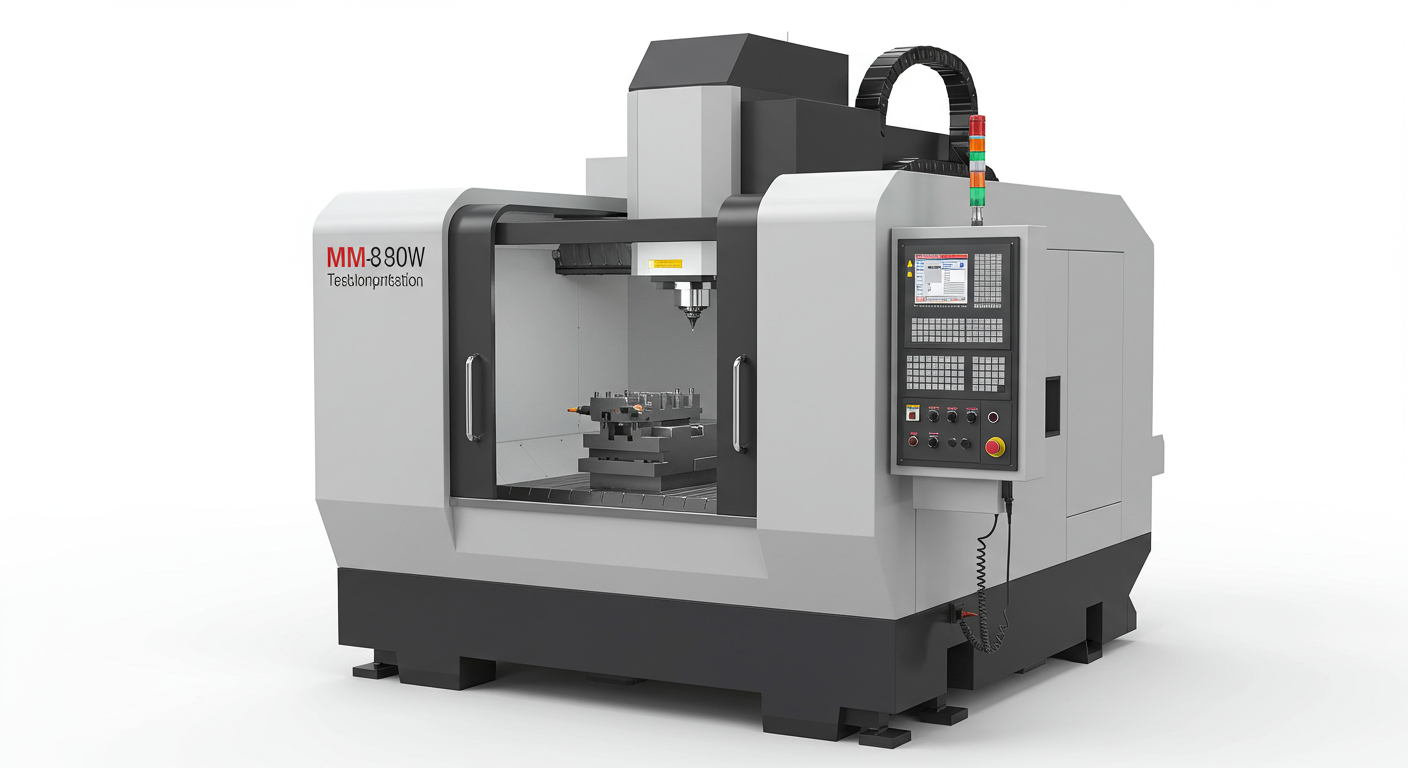
Describe the asset you propose to acquire: a new, modern 5-axis CNC machine. Explain how this specific solution directly addresses the problems you just outlined. Connect its features (e.g., 5-axis capability, higher reliability, greater precision) to business benefits (e.g., ability to bid on new contracts, reduced downtime, lower material waste).
Step 5: Conduct the Financial Analysis
This is the core of your business case. Use the CNC Machine Acquisition: Cost-Benefit Data to build your financial argument.
1. Calculate Total Investment: Sum all one-time costs (purchase price, installation, training).
2. Calculate Annual Net Benefit: Sum all annual savings and new benefits, then subtract any new annual costs.
3. Calculate Key Metrics: Use your totals to calculate the Return on Investment (ROI) and the Payback Period. Present your findings in a clear table within your document.
Step 6: Assess Risks and Mitigation
Every investment has risks. Identifying them shows foresight and builds credibility. Consider potential risks such as implementation delays, unexpected training needs, or supply chain issues for the new machine. For each risk you identify, propose a brief but clear mitigation strategy.
Pro Tip: Be Realistic About Risks
Decision-makers appreciate honesty. Acknowledging potential risks and presenting thoughtful mitigation plans builds credibility and shows you've done your due diligence. Avoid downplaying risks, as it can undermine the trust in your entire analysis.
Step 7: Formulate a Clear Recommendation
Conclude your business case with a direct and unambiguous recommendation. Based on your analysis, state clearly whether the organization should proceed with the investment. Briefly reiterate the top 2-3 reasons supporting your conclusion (e.g., "Given the projected 2.5-year payback period and the opportunity to enter new markets, I recommend approving the expenditure of $485,000 for the acquisition of a new 5-axis CNC machine.").
An Expert Response
A Model for Success
This is a sample of an expert-level response. Your own response may be structured differently or emphasize different points while still being excellent. Use this as a guide to compare against your own work, not as the only correct answer.
Business Case: Acquisition of a 5-Axis CNC Machine
1. Executive Summary This business case recommends the acquisition of a new 5-axis CNC machine at a total estimated cost of $485,000. The current primary CNC machine (CN-4815) is unreliable, causing significant production downtime and incurring excessive maintenance costs. Replacing it will generate an estimated annual net benefit of $180,000 through cost savings and increased production capacity. The investment has a projected Payback Period of 2.69 years and directly supports our strategic goal of expanding into higher-margin, complex manufacturing. We recommend immediate approval to proceed with the acquisition.
2. Problem Statement Our primary CNC machine, CN-4815, has become a critical liability. The 15-year-old asset experienced a 40% increase in unscheduled downtime over the past 18 months, directly delaying production for two key product lines. Annual maintenance costs have escalated to $60,000, a three-fold increase over the previous fiscal year. Continuing to operate CN-4815 exposes the company to escalating costs, unreliable production schedules, and the inability to compete for modern, high-complexity manufacturing contracts, representing a significant opportunity cost.
3. Proposed Solution & Financial Analysis We propose the acquisition and installation of a new, modern 5-axis CNC machine. This asset will eliminate the reliability issues of CN-4815 and provide the advanced capabilities required to expand our service offerings.
Financial Summary:
| Item | Amount (USD) | Type |
|---|---|---|
| Purchase Price | $450,000 | One-Time Cost |
| Installation & Setup | $25,000 | One-Time Cost |
| Operator Training | $10,000 | One-Time Cost |
| Total Initial Investment | $485,000 | One-Time Cost |
| Maintenance Cost Reduction | $50,000 | Annual Savings |
| Automated Labor Savings | $40,000 | Annual Savings |
| Reduced Material Waste | $15,000 | Annual Savings |
| Increased Production Output | $75,000 | Annual Benefit |
| Total Annual Net Benefit | $180,000 | Annual Benefit |
Key Financial Metrics: * Payback Period: $485,000 / $180,000 = 2.69 Years * Return on Investment (Year 1): ($180,000 / $485,000) * 100 = 37.1%
4. Risk Assessment * Risk: Implementation Delay - Potential delays in shipping or installation could postpone the realization of benefits. * Mitigation: Work with a reputable vendor with a strong track record and build a 2-week buffer into the project timeline. * Risk: Operator Learning Curve - Staff may require more time than anticipated to become proficient on the new machine. * Mitigation: The training budget includes a provision for follow-up training. Schedule initial production runs on lower-priority jobs to allow for skill development.
5. Recommendation Based on the compelling financial returns and strategic benefits, we recommend the approval of a capital expenditure of $485,000 for the acquisition of a new 5-axis CNC machine. This investment resolves a critical operational vulnerability and positions the company for future growth.
Assess Yourself
Self-Evaluation
Use the following criteria to assess the quality and completeness of your business case. This is a chance to reflect on your work and identify areas for improvement.
- Clarity of Problem Statement: Does your case clearly articulate the business problem and the financial and operational costs of inaction?
- Financial Rigor: Is your financial analysis based on the provided data, and are calculations like the Payback Period presented clearly and correctly?
- Strategic Alignment: Have you successfully linked the proposed acquisition to broader business goals, such as increased productivity, reduced costs, or new market opportunities?
- Risk Assessment: Did you identify relevant risks beyond the obvious and propose credible, specific mitigation strategies for them?
- Persuasiveness and Professionalism: Is the document well-structured, easy to read, and does it make a compelling, data-driven argument for the investment?
- Completeness: Does your business case include all the standard sections, from the executive summary to the final recommendation?
Learning Progress
In this activity, you have practiced a critical skill in asset management: developing a compelling business case for asset acquisition. You have demonstrated the ability to structure a formal argument, analyze financial data to calculate key metrics, and present a persuasive, data-driven recommendation to justify a capital investment.
Next Steps
Excellent work. You have successfully drafted a complete business case, a fundamental skill for any asset management professional. Please navigate back to the course to continue your learning journey.
