
The Case
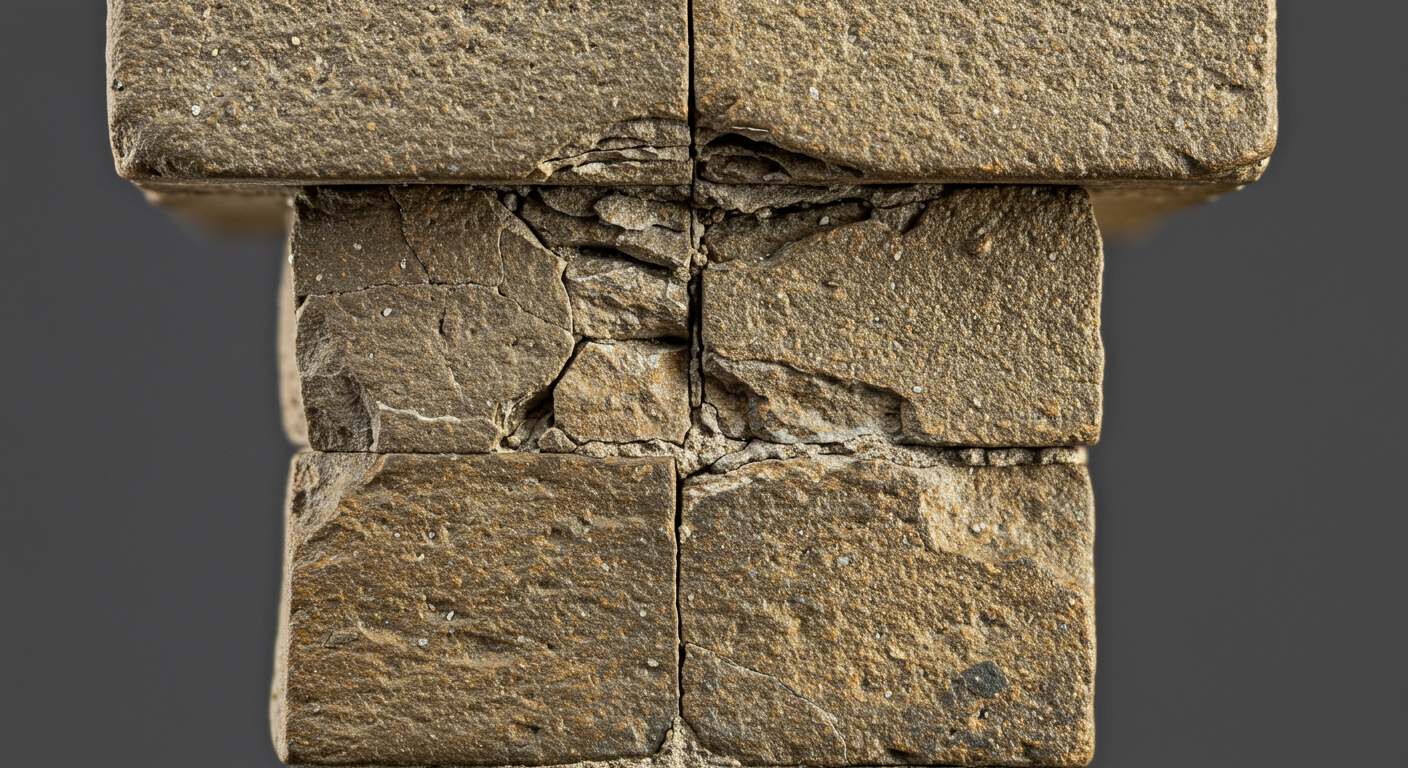
The town of Riverbend loves its history, and nothing embodies that more than the Old Mill Bridge. It’s a 110-year-old stone arch bridge on a secondary road, a postcard-perfect landmark that features on the town’s own website. For you, as Riverbend’s new Infrastructure Asset Manager, it’s also your first major headache. The bridge is showing its age. A recent inspection report landed on your desk with a thud, filled with technical terms like "spalling" and "joint deterioration." The bottom line is clear: the bridge's load capacity is compromised.
The previous manager’s approach was simple: patch the worst of the cracks every few years. This "fix-it" method kept the bridge open, but it was a band-aid on a deepening wound. Now, the town council, facing a tight budget, is pressuring you for a quick solution. The council chair, a fiscal conservative, has already publicly stated he wants the "most cost-effective patch to get us through the next five years." It’s a popular opinion; no one wants a tax hike to pay for a bridge that seems "good enough."
However, your training in strategic asset management tells you that the cheapest option is rarely the best value. The inspection report contains data, not just warnings. The rate of deterioration is accelerating. A simple patch might not even last five years, and a partial failure could be catastrophic, not just for the budget, but for the community's trust and safety. Furthermore, the bridge provides the only access to a small but growing business park, and a long-term closure would have real economic consequences.
You are at a crossroads. You can recommend the politically easy, low-cost patch that you know is a short-sighted gamble. Or, you can advocate for a more comprehensive, strategic solution—a major rehabilitation or even a full replacement—that considers the bridge's entire lifecycle, its role in the community, and the long-term risks. This path is more expensive upfront and is guaranteed to spark a difficult debate with the council and the public. The council meeting is in two weeks, and they expect your formal recommendation.
Resources and Data
You have the following documents and data to inform your decision.
Key Document: MEMORANDUM: FY Budget Constraints
Old Mill Bridge: Options Analysis Summary
| Option | Description | Upfront Cost (Est.) | Service Life (Years) | Lifecycle Cost (25-Year) | Risk Profile |
|---|---|---|---|---|---|
| Minimal Patch | Spot repairs on the bridge deck and structural components to address immediate safety concerns and extend life short-term. | 125000 | 4 | 1875000 | High |
| Major Rehabilitation | Comprehensive repair of all deteriorated elements, including deck resurfacing, joint replacement, and steel member strengthening. | 950000 | 22 | 1250000 | Low |
| Full Replacement | Demolition of the existing structure and construction of a new bridge designed to modern engineering standards for long-term service. | 2500000 | 75 | 2550000 | Very Low |
📊 View Diagram: Decision Approach: Reactive vs. Strategic
Lifecycle Cost
Your Task
You are the Infrastructure Asset Manager for the town of Riverbend. Your task is to prepare a formal recommendation for the Town Council regarding the Old Mill Bridge. Your recommendation should be presented as a concise but well-supported memo. You must choose one of the three options (Patch, Rehabilitate, or Replace) and justify your choice using the principles of strategic asset management and the evidence provided in the resources. Your goal is to persuade the council that your recommendation provides the best long-term value for the community, even if it is not the cheapest short-term option.
How to Structure Your Response
A strong recommendation follows a clear logical path. Structure your analysis using these four steps:
- Define the Problem: Clearly state the core problem beyond just 'the bridge is old.'
- Identify Core Issues: Analyze the data and resources to identify the financial, safety, and community issues at play.
- Evaluate Options: Briefly assess the pros and cons of each potential solution (patch, rehab, replace).
- Recommend & Justify: State your final recommendation clearly and provide a compelling justification based on lifecycle cost, risk, and strategic objectives.
Guiding Questions
Use these questions to help focus your analysis and build your recommendation.
- What is the immediate problem presented by the Old Mill Bridge's condition? What is the larger, strategic problem facing the town?
- Based on the Finance Director's memo, what is the primary driver behind the council's preferred solution? What are the risks of accepting this constraint without question?
- Looking at the "Options Analysis" data, which option has the lowest upfront cost? Which has the lowest 25-year lifecycle cost? What does this difference tell you?
- How does the "Reactive vs. Strategic" diagram apply to this situation? Which cycle does the "Minimal Patch" option belong to? Which cycle does "Major Rehabilitation" or "Full Replacement" belong to?
- Who are the key stakeholders in this decision? Think beyond the council (e.g., business owners, taxpayers, historical society, daily commuters). How might their interests differ?
- How could you use the concept of "Lifecycle Cost" to argue against the cheapest upfront option?
- What is the strongest argument for the "Minimal Patch" option? What is the strongest argument against it?
- If you choose a more expensive option, how will you justify the significant upfront cost to a skeptical, budget-conscious Town Council?
An Expert Response
A Sample Expert Approach
The following is one possible expert-level response. It is designed to demonstrate the application of strategic asset management principles. Your own response may have been different, but equally valid, as long as it was well-reasoned and supported by the evidence.
MEMORANDUM
TO: Riverbend Town Council FROM: Infrastructure Asset Manager SUBJECT: Recommendation for Old Mill Bridge: A Strategic Path Forward
1. Problem Definition
The immediate issue with the Old Mill Bridge is its deteriorating condition and reduced load capacity, which presents a growing public safety risk. The strategic problem, however, is how we manage critical infrastructure to ensure long-term safety, fiscal responsibility, and community value. Adopting a reactive, short-term fix for a systemic problem creates a cycle of escalating costs and increasing risk.
2. Analysis of Options
I have analyzed three potential paths forward, considering both immediate budget constraints and long-term value, as detailed in the attached data sheet.
- Option A: Minimal Patch ($125k): This option meets the immediate budget target. However, with a service life of only 3-5 years and a 'High' risk profile, it is a temporary measure at best. It commits us to repeated, costly repairs and a prolonged period of uncertainty and risk. The 25-year lifecycle cost is the highest of all options due to this repetitive cycle.
- Option B: Major Rehabilitation ($950k): This is a significant investment that would restore the bridge's structural integrity and extend its service life by 20-25 years. It addresses the root causes of deterioration, dramatically lowers the risk profile, and preserves the bridge's historical character.
- Option C: Full Replacement ($2.5M): This option provides the longest-term solution (75+ years) and the lowest lifecycle cost. While it offers the greatest certainty, the upfront cost is substantial and the historical character of the original bridge would be lost.
3. Recommendation
I recommend Option B: Major Rehabilitation.
4. Justification
While the "Minimal Patch" is the cheapest option today, it is the most expensive in the long run. The "Options Analysis" data clearly shows its 25-year lifecycle cost is far greater than a strategic, one-time investment. Deferring necessary work only guarantees that the problem will be more severe and more expensive to fix in the near future.
The Major Rehabilitation strikes the optimal balance between fiscal prudence, public safety, and community value. It moves us from a reactive "fix-it" cycle to a strategic management approach. It resolves the underlying structural issues, ensures the bridge remains safe and functional for decades, and supports the businesses that rely on it.
I recognize that the $950,000 cost is well outside the current budget allocation. I propose we explore financing options, such as a capital improvement bond or grant applications for historical preservation, to fund this critical project. Investing wisely now will prevent a future emergency and protect one of Riverbend's most cherished assets for the next generation.
Assess Yourself
Evaluate Your Own Response
Use the following criteria to reflect on your own recommendation. This isn't about being 'right' or 'wrong,' but about strengthening your ability to build a persuasive, data-driven case. Consider how you could improve your analysis in each area.
- Problem Framing: A high-quality response distinguishes between the immediate symptom (a failing bridge) and the strategic problem (reactive vs. proactive management). Did you frame the decision in its larger context?
- Data-Driven Analysis: A strong response uses specific data points from the "Options Analysis" table (e.g., lifecycle cost, service life) to support its claims, rather than relying on general statements.
- Stakeholder Awareness: An effective recommendation acknowledges the different stakeholder interests, particularly the council's budget concerns, and addresses them directly and respectfully.
- Risk Assessment: A persuasive argument clearly articulates the risks associated with each option, especially the hidden risks of the "do-nothing" or "patch" approach.
- Strategic Justification: The best responses justify their recommendation using core asset management principles, explaining why their chosen path provides the best long-term value for the community.
- Clarity and Professionalism: Your recommendation should be clear, concise, and written in a professional tone appropriate for an official memo to decision-makers.
Learning Progress
By working through this case, you have practiced applying fundamental asset management principles to a realistic scenario. You've analyzed how a strategic, lifecycle-based approach provides better outcomes than a simple "fix-it" mentality and considered how competing stakeholder interests and objectives shape the decision-making process for critical infrastructure.
Next Steps
Excellent work analyzing the Old Mill Bridge case. You have successfully completed this practice activity. Please navigate back to the course to continue with the next topic.
