
Welcome to Asset Management: More Than Just Maintenance
Imagine you are the public works director for a mid-sized coastal city. A recent inspection of the main bridge connecting downtown to the northern suburbs has revealed significant corrosion. The immediate, reactive solution is to patch it up. But is that the right solution? What if that money would be better spent on a comprehensive upgrade of the city's water mains, which are nearing the end of their service life? How does the bridge repair fit into the long-term transportation plan? What are the risks of doing nothing? Who needs to be involved in this decision?
This is the world of Physical and Infrastructure Asset Management. It’s a discipline that moves beyond the simple "break-fix" cycle. It provides a structured, strategic approach to decision-making, ensuring that an organization gets the most value from its physical assets while balancing performance, cost, and risk.
At its core, Asset Management is about making the best possible choices to support your organization's overall goals.
Welcome to your first module in Strategic Framework & Governance! We're starting with the big picture. The goal here isn't to memorize definitions, but to build a mental model of what asset management is and why it's a vital strategic function for any organization that relies on physical assets.
From Single Assets to a Strategic Portfolio
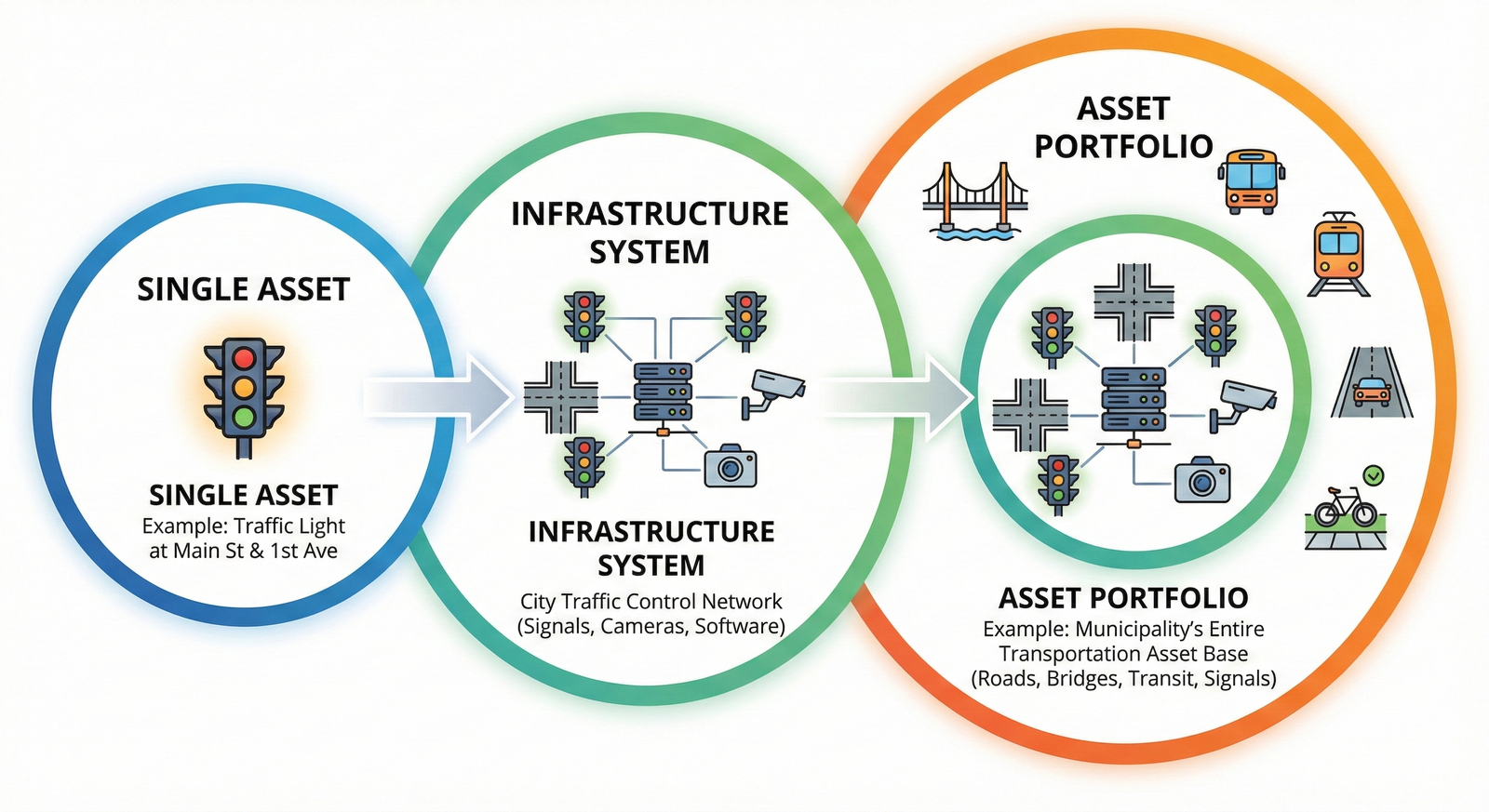
To understand the practice, we first need to agree on our terms. We begin with the most fundamental unit: the Asset. An asset can be as small as a single pump in a water treatment plant or as large as an entire airport runway.
These individual assets rarely exist in isolation. They are typically part of a larger, interconnected network of Infrastructure. That single pump is part of a water distribution system, which itself is part of the city's public works infrastructure.
As an asset management professional, you will be responsible for overseeing an entire Asset Portfolio. This means you won't just be thinking about one bridge or one pipe; you'll be managing the entire collection of assets to deliver a certain level of service, aligned with your organization's mission.
Time for our first deep dive. The following reading explores the history and core principles that underpin modern asset management. As you read, think about how this field evolved from a purely technical, engineering function into the strategic discipline it is today.
Reading: The Foundational Principles of Modern Asset Management
Launch the reading to explore a key course topic.
A Framework for Decision-Making
As you saw in the reading, a key development in our field was the formalization of the Asset Management System. This isn't an IT platform, but rather the entire framework of an organization's approach to managing its assets. It includes everything from high-level Policy to the detailed procedures for inspecting a piece of equipment.
Effective asset management requires strong Governance to ensure that decisions are made consistently and in line with the organization's goals. It considers the entire asset Lifecycle, from initial planning to final disposal.
The engine that drives this system is a continuous improvement cycle, often visualized as Plan-Do-Check-Act.
📊 View Diagram: The Plan-Do-Check-Act Cycle in Asset Management
This cycle ensures that the asset management system isn't static; it evolves and improves over time. The "Plan" stage is where strategy is formalized. This is where we define our Asset Management Objectives and document them in the most important document for a strategic asset manager: the SAMP.
The next reading focuses on the Strategic Asset Management Plan, or SAMP. This is a cornerstone document in our profession. Pay close attention to how it acts as a bridge, connecting the high-level goals of the entire organization (like financial sustainability or public safety) to the specific activities of the asset management team.
Reading: An Introduction to the Strategic Asset Management Plan (SAMP)
Launch the reading to explore a key course topic.
The Human Element: Working with Stakeholders
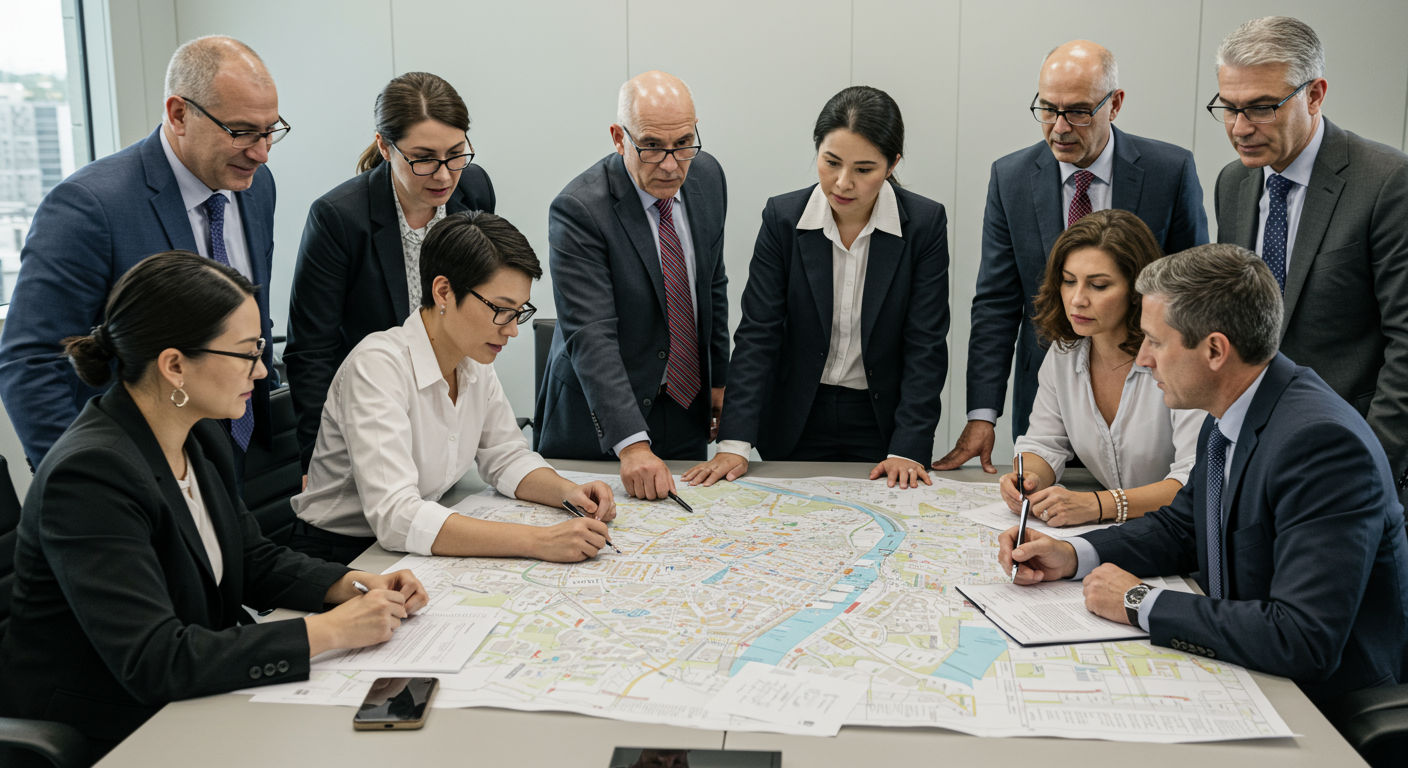
A perfect plan on paper is useless if it doesn't meet the needs of the people it serves. Asset management is not performed in a vacuum. It involves a wide range of individuals and groups, both inside and outside the organization. We call these people a Stakeholder.
Stakeholders for our city's bridge might include commuters, local business owners, the finance department, regulatory agencies, and elected officials. Each has different needs, expectations, and levels of influence. A core skill for an asset manager is identifying these stakeholders and understanding their perspectives.
Now it's time to practice a fundamental skill. Identifying and analyzing stakeholders is something you'll do on nearly every project. This next activity will walk you through the process. It's a great opportunity to get familiar with the types of hands-on activities you'll encounter in this course.
Skills Practice: Stakeholder Identification and Analysis
Launch the interactive skills practice to build and apply your new abilities.
Excellent work. You've now been introduced to the core principles, key documents, and essential skills of asset management. Let's put it all together. The following instructional case study will ask you to step into the role of an asset manager and apply what you've learned to a realistic scenario.
Case Study: The Old Mill Bridge: A Strategic Decision
Launch the interactive case study to analyze a real-world scenario.
Assess Yourself
❓ Knowledge Check
Test your understanding of the key concepts from this section.
Wrapping Up
Congratulations on completing your first module! You've taken a big step into the world of professional asset management. You can now explain what Physical and Infrastructure Asset Management is and why it's so much more than just maintenance. You've seen how a strategic approach, guided by an Asset Management System and a Strategic Asset Management Plan, allows organizations to make smart, value-driven decisions. Most importantly, you've started to practice a key skill: identifying the stakeholders who are at the heart of every asset management challenge. This foundation will serve you well as we move into more complex topics.
Next Steps
You have successfully completed the first module. Well done!
Please return to the main course page to see your updated progress and to continue your learning journey.
