The Case
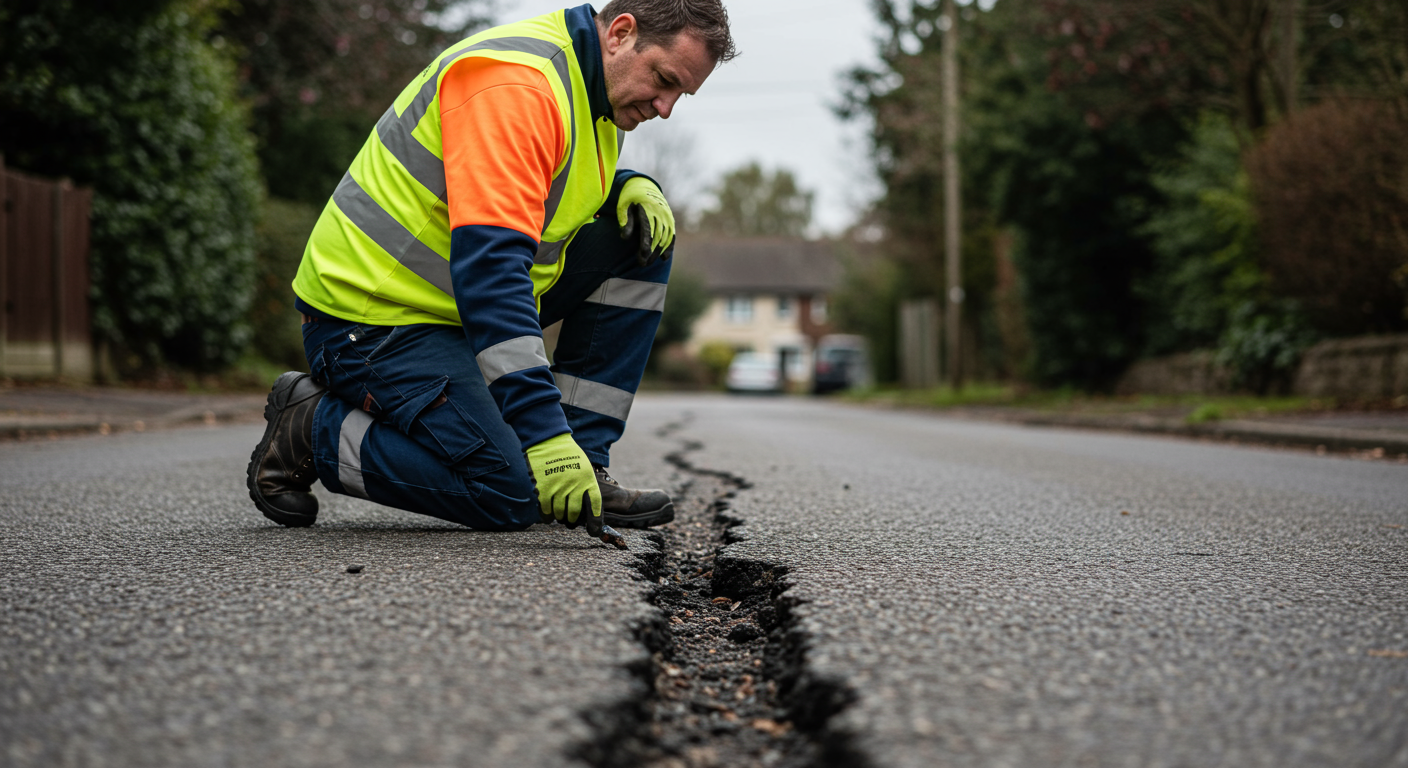
The City of Northwood prides itself on its quiet, tree-lined streets. But lately, those streets are talking back. After a harsh winter, potholes are multiplying, and resident complaints are piling up. You are a new Junior Asset Analyst in the Public Works department, eager to make a good impression. Your boss, Frank Miller, is the Director of Public Works. He's been with the city for 30 years, knows every storm drain and curb by heart, and trusts his gut more than any spreadsheet.
This morning, Frank dropped a printout of angry emails on your desk. "It's a PR nightmare," he grumbled. "The city council is breathing down my neck about the budget, and I've got residents demanding we fix every single pothole by next month. We don't have the money for a full paving program this year. We need a quick, cheap plan to shut everyone up."
He wants you to take the list of the ten worst-rated road segments and create a "worst-first" patching plan. The logic is simple: find the biggest holes and fill them. It's the way Northwood has always handled road maintenance, and it's a straightforward, easy-to-defend strategy for the upcoming council meeting. It feels like your first real test, a chance to show you can follow orders and deliver a fast solution.
However, something from your recent asset management certification course is nagging at you. You remember learning about the asset lifecycle—the idea that managing an asset from creation to disposal is far more cost-effective than just reacting to failures. A "worst-first" approach feels like playing whack-a-mole. You suspect that some roads that look okay today might be just one winter away from catastrophic failure, a point of no return where a cheap preventative fix is no longer an option. Ignoring them now could mean a massive reconstruction bill in just a few years.
You're at a crossroads. Do you give Frank the simple, reactive plan he asked for, proving you're a team player? Or do you risk overstepping by analyzing the data through a lifecycle lens, potentially proposing a more complex, strategic plan that he didn't ask for and might not want to hear?
Resources and Data
You have access to a few key pieces of information to help you understand the situation in Northwood.
Key Document: Email from Director Miller
Northwood Pavement Condition Report
| Road Segment ID | Road Name | Pavement Condition Index | Last Rehab Year | Traffic Volume |
|---|---|---|---|---|
| NW-1001 | Main St | 62 | 2011 | High |
| NW-1002 | Oak Ave | 78 | 2017 | Medium |
| NW-1003 | River Rd | 28 | 2002 | High |
| NW-1004 | Willow Creek Dr | 95 | 2022 | Medium |
| NW-1005 | Old Mill Rd | 18 | 1999 | Low |
| NW-1006 | Commerce Dr | 55 | 2009 | High |
| NW-1007 | Aspen Ct | 100 | 2023 | Low |
| NW-1008 | Sycamore St | 35 | 2004 | Medium |
| NW-1009 | Central Ave | 58 | 2010 | High |
| NW-1010 | Chestnut Ave | 31 | 2003 | Medium |
| NW-1011 | Northwood Blvd | 88 | 2020 | High |
| NW-1012 | Elm St | 75 | 2018 | Medium |
| NW-1013 | Industrial Way | 22 | 2001 | High |
| NW-1014 | Pine Ln | 82 | 2019 | Low |
| NW-1015 | Washington St | 64 | 2012 | High |
| NW-1016 | Maple Dr | 42 | 2006 | Medium |
| NW-1017 | Birch St | 45 | 2007 | Low |
| NW-1018 | Hillside Terrace | 39 | 2005 | Low |
| NW-1019 | Liberty Pike | 71 | 2015 | Medium |
| NW-1020 | Cedar Blvd | 91 | 2021 | Medium |
Pavement Condition Index (PCI)
Your Task
You are the Junior Asset Analyst. Your task is to prepare a recommendation for your director, Frank Miller. You must decide whether to present the simple "worst-first" patching plan he asked for or to advocate for a more strategic approach based on asset lifecycle principles.
Using the email from Frank, the road condition data, and the conceptual diagrams, formulate your position. Your final output should be a clear, evidence-based recommendation that you could confidently present to Frank. What is the best course of action for the City of Northwood, not just for this budget cycle, but for the next five to ten years?
How to Structure Your Response
A strong analysis follows a clear structure. Use this four-step process to build your recommendation:
- Define the Problem: What is the core problem you are being asked to solve? Is it just about potholes, or is there a deeper issue?
- Identify Core Issues: Analyze the provided data and resources. What are the risks of a 'worst-first' approach? What opportunities does a lifecycle approach present?
- Identify Possible Solutions: Outline at least two distinct options. One should be the 'worst-first' plan. The other should be your proposed alternative.
- Recommend a Solution: State your final recommendation clearly. Justify your choice using specific data points and by referencing the asset lifecycle model.
Guiding Questions
- Based on Frank's email, what are his primary concerns and motivations? What does he see as a "win"?
- Looking at the
road-condition-data, which 10 roads have the lowest Pavement Condition Index (PCI)? - Now, look beyond the lowest PCI. Are there any roads with high traffic volume and a PCI between 50 and 65? What does the Pavement Asset Lifecycle Curve suggest about these specific roads?
- What is the fundamental difference between a "worst-first" approach and an asset lifecycle management approach?
- Using the lifecycle curve, explain the financial difference between performing "Preventive Maintenance" on a road with a PCI of 65 versus "Reconstruction" on a road with a PCI of 30.
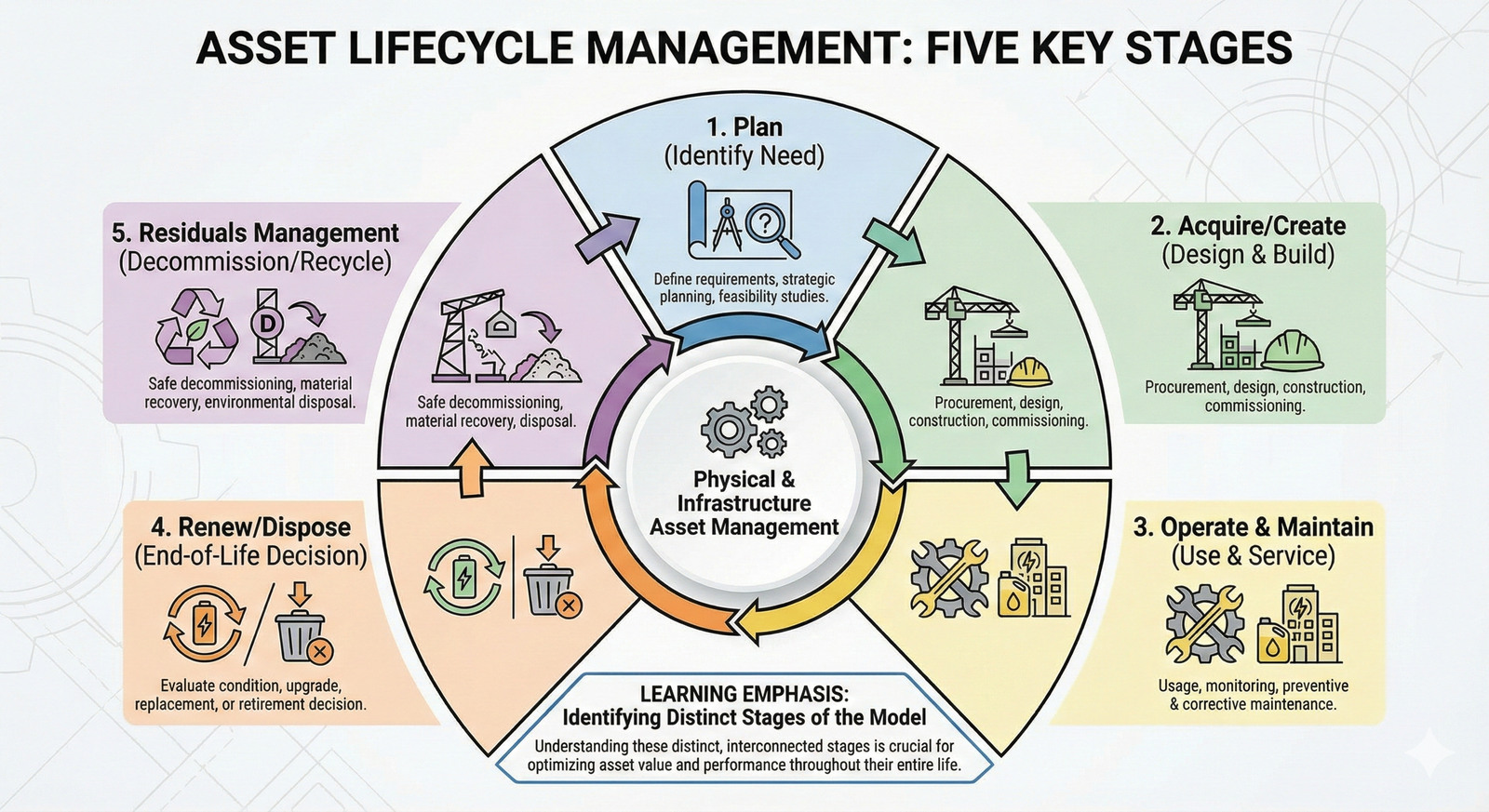
- How does the Asset Lifecycle Stages infographic relate to the problem of managing Northwood's roads? Which stage is Frank's plan focused on, and which stages does it ignore?
- What are the long-term risks to the city's budget if it only follows a "worst-first" strategy for the next five years?
- How would you frame your recommendation to Frank in a way that respects his experience but also clearly communicates the benefits of your proposed alternative?
An Expert Response
Note on the Expert Response
This is one example of a strong response. It is not the only possible 'correct' answer. An effective analysis is characterized by its clear reasoning and strong evidence, regardless of the final recommendation. Use this to compare against your own thinking.
Recommendation Memo Outline
To: Frank Miller, Director of Public Works From: Junior Asset Analyst Subject: Proposed Road Maintenance Plan: A Hybrid Approach for Long-Term Savings
1. Problem Definition & Acknowledgment The immediate problem is addressing citizen complaints and council pressure regarding the state of our roads within a tight budget. The "worst-first" approach of patching the 10 roads with the lowest PCI is the fastest way to address the most visible failures. This directly responds to the immediate pressure.
2. Analysis & Opportunity While a "worst-first" plan offers a short-term solution, the road condition data reveals a more significant underlying risk. For example, Maple Avenue and 3rd Street both have high traffic volumes but PCI scores in the low 60s. According to the standard Pavement Lifecycle Curve, these assets are at the "knee of the curve." They are about to enter a period of rapid deterioration.
- Risk of Inaction: If we only patch the worst roads and ignore these, they will likely require full, expensive reconstruction in the next 3-5 years.
- Opportunity for Action: Intervening now with lower-cost preventative maintenance (like crack sealing or a top-layer overlay) can extend their life by 7-10 years, pushing that major reconstruction cost far into the future. This is the core principle of the Operate & Maintain stage of the asset lifecycle.
3. Proposed Solutions
- Option A: "Worst-First" Reactive Plan: Address the 10 lowest PCI roads with basic patching. This is the lowest immediate cost but carries high future financial risk by ignoring assets on the verge of rapid decline.
- Option B: Hybrid Lifecycle Plan: Allocate a portion of the budget (e.g., 60%) to patch the 5 most critical failed roads (lowest PCI and/or highest traffic). Allocate the remaining 40% to preventative maintenance on key roads like Maple Ave and 3rd Street that are not yet "worst" but are at a critical intervention point.
4. Recommendation & Rationale I recommend Option B: The Hybrid Lifecycle Plan.
This approach allows us to remain responsive to the most vocal complaints by fixing several of the worst roads. Critically, it also allows us to make a strategic, data-driven investment that will prevent much larger costs in the near future. By spending a little on preventative care for Maple and 3rd now, we avoid a multi-million dollar reconstruction bill down the line. This demonstrates fiscal responsibility to the council and shifts our department from a reactive "firefighting" model to a proactive, cost-effective asset management strategy, ultimately saving taxpayer money and improving overall network health over the long term.
Assess Yourself
Evaluate Your Analysis
Review your own conclusions before reading the expert response. Use the criteria below to honestly assess the strengths and weaknesses of your analysis. This is about the process, not just the answer.
- Problem Framing: Did you identify the deeper, strategic problem of reactive maintenance, or did you only focus on the surface-level task of fixing potholes?
- Data-Driven Analysis: Did you use specific data from the road condition table (PCI, Traffic Volume, Last Rehab Year) to identify not just the worst roads, but also the strategic intervention candidates?
- Application of Models: Did you correctly connect the data points to their position on the Pavement Lifecycle Curve to justify your analysis? Did you reference the broader Asset Lifecycle Model?
- Solution Development: Did you present clear, distinct options? Was your recommended solution a thoughtful compromise or a single-minded approach?
- Stakeholder Awareness: Was your recommendation framed in a way that would be persuasive to a skeptical, budget-conscious director like Frank? Did you acknowledge his immediate concerns?
- Clarity of Rationale: Is the justification for your final recommendation clear, logical, and directly supported by the evidence and models provided?
Learning Progress
By working through this case, you have put the core principles of asset management into practice. You've seen how the asset lifecycle delivery model provides a framework for making strategic decisions and have identified the key stages—from planning and maintenance to renewal—that are critical for managing infrastructure effectively.
Next Steps
You have successfully completed this case study. You've applied theoretical knowledge to a practical problem, a key skill for any asset manager. Please navigate back to the course to continue your learning journey.