
From Data to Decisions
Welcome to Module 2. In our last module, we explored the foundations of data and analytics in asset management. Now, we move from theory to practice. This module is about the critical process of transforming raw data into reliable, actionable intelligence that drives optimized decisions.
Think of an asset manager responsible for a city's water main system. They have decades of data: installation dates, material types, repair histories, and sensor readings. But this data is messy. Some records are incomplete, others have typos, and some sensor readings are clearly erroneous. Simply running this raw data through a predictive model would be like trying to navigate a ship with a faulty compass—the results would be unreliable and potentially disastrous.
Our goal in this module is to give you the skills to be the person who can clean that compass, chart the course, and make a sound recommendation. We'll start by learning how to assess the quality of data and then apply techniques to clean and prepare it for analysis.
The Foundation: Data Quality and Cleansing
You can't build a strong house on a weak foundation. In analytics, your data is the foundation. If it's poor quality, any decision you base on it will be suspect. This is why the first step for any serious analyst is to rigorously evaluate their dataset.
We begin with the concept of data quality. It isn't a single metric but a multi-faceted assessment of your data's fitness for a specific purpose.
This is a great time to go deeper into what makes data "good" or "bad." The following reading explores the different dimensions of data quality and provides real-world examples of how poor data quality has led to costly errors in asset management.
Reading: The Dimensions of Data Quality in Asset Management
Launch the reading to explore a key course topic.
Once you've identified issues, the next step is data cleansing. This involves a set of practical techniques to fix the problems you've found. Two of the most common issues you'll encounter are missing values and outliers.
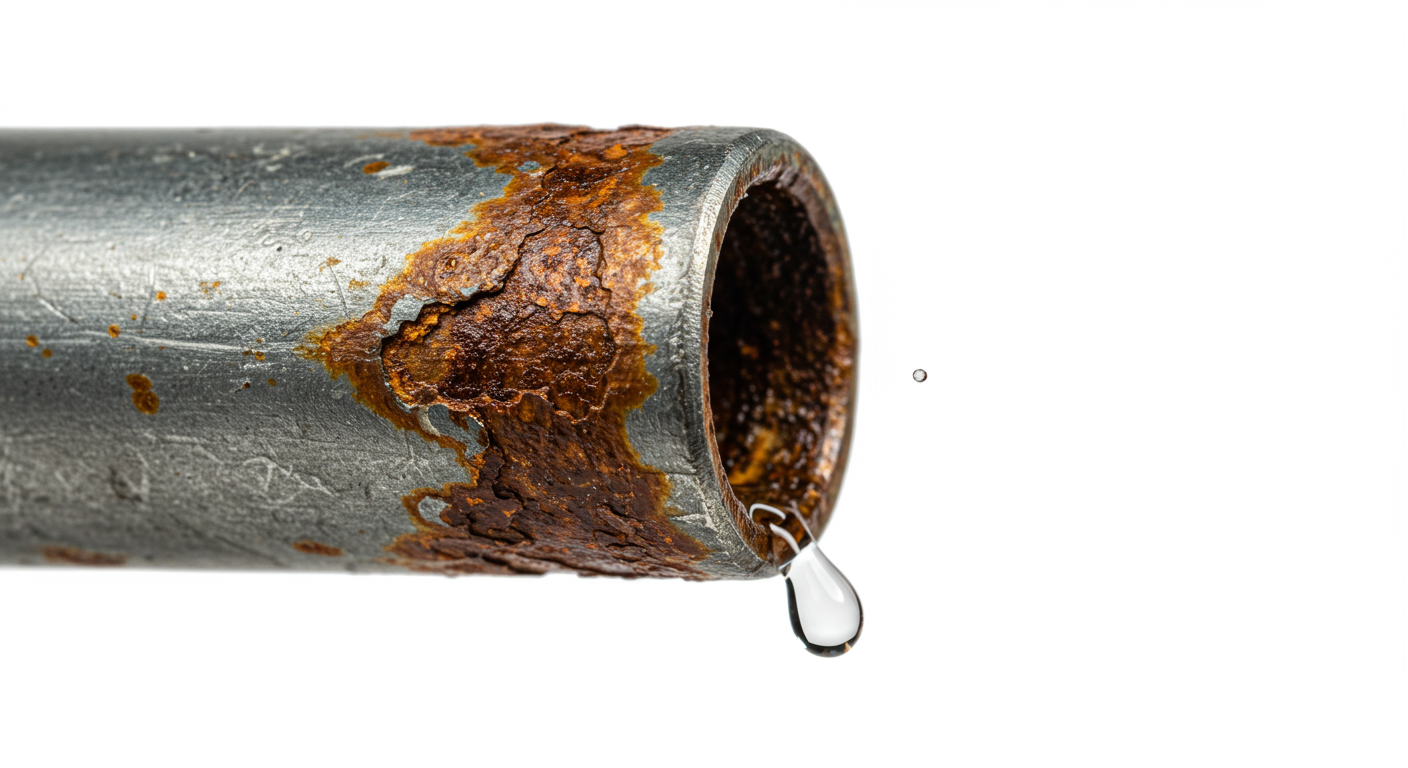
Knowing the theory is one thing, but data cleansing is a hands-on skill. The next activity is a guided tutorial where you'll work with a sample dataset and practice the techniques we've just discussed. This is your chance to get your hands dirty with data!
Skills Practice: Practical Data Cleansing for Asset Condition Data
Launch the interactive skills practice to build and apply your new abilities.
Applying Analytical Models
With clean, reliable data, you can now move on to the exciting part: analysis. In asset management, we use analytical models to uncover patterns, predict future outcomes, and optimize decisions. One of the most powerful and widely used techniques is regression analysis.
At its core, regression helps us understand how a change in one thing affects another. For example, how does a pipe's age and material type affect its likelihood of failure? The variable we are trying to predict (likelihood of failure) is called the dependent variable, and the factors we use for the prediction (age, material) are the independent variables.
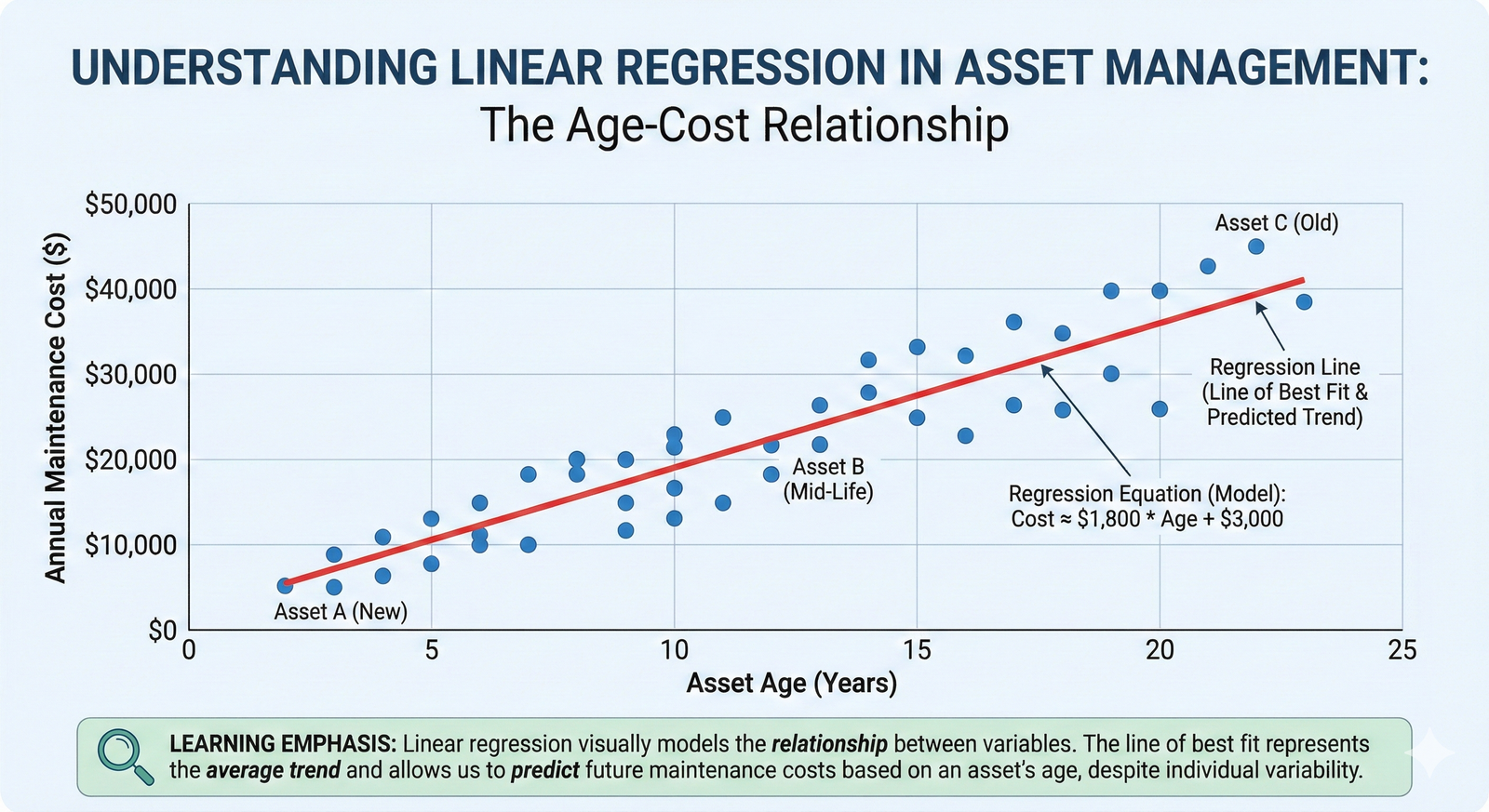
When you build a regression model, you need to evaluate how well it actually works. Two key metrics for this are R-squared, which tells you how much of the outcome is explained by your model, and the p-value, which helps determine if your findings are statistically significant.
While regression is a workhorse, other models are essential for handling uncertainty and complexity. The following reading introduces two more advanced methods.
This next reading covers some powerful techniques. Don't worry about becoming a master of them right away. The goal is to understand what they are and when you might use them. Pay special attention to the difference between deterministic models like regression and stochastic models like Monte Carlo simulation.
Reading: Introduction to Advanced Analytical Models: Monte Carlo Simulation and Optimization
Launch the reading to explore a key course topic.
The reading introduces Monte Carlo Simulation Monte Carlo Simulation, a powerful tool for modeling risk and uncertainty, and optimization models, which help you find the best possible decision under a given set of constraints. These models are often stochastic, meaning they incorporate randomness to reflect the real world's unpredictability.
Deterministic vs. Stochastic Models
A simple way to remember the difference: A deterministic model will give you the same exact output every time you give it the same inputs (e.g., 2+2 always equals 4). A stochastic model, like a Monte Carlo simulation, will give you a range of possible outcomes based on probabilities, reflecting real-world uncertainty.
Tying It All Together
Now it's time to combine everything you've learned: data cleansing, regression analysis, and interpreting results.
The following case study places you in the role of an analyst at a public transit agency. You'll be given a messy dataset and a clear business problem. Your task is to apply the skills from this module to clean the data, analyze it, and provide a data-driven recommendation. This is where the learning really comes to life!
Case Study: Predicting Bus Maintenance Needs Using Regression Analysis
Launch the interactive case study to analyze a real-world scenario.
Assess Yourself
❓ Knowledge Check
Test your understanding of the key concepts from this section.
Wrapping Up
Excellent work completing this module! You've navigated the entire journey from messy, raw data to a clear, analytical recommendation. You've learned how to evaluate data quality and perform essential data cleansing, which is the bedrock of any sound analysis. More than that, you've applied a powerful analytical model—regression analysis—to uncover insights and then interpreted the results to make a defensible decision. This process is central to the work of a modern asset management professional. Keep these skills sharp, as they are in high demand and form the basis for even more advanced analytics.
Next Steps
You have successfully completed the work for this module. Please return to the course homepage to review your graded assessments and continue to the next module.